THE FROGGATT FAMILY OF BREWHOUSE YARD:
AN EXTRA-PAROCHIAL PLACE ADJOINING NOTTINGHAM CITY
(1797 – 1835)
JAMES FROGGATT (1725-1808)
This story starts with the James FROGGATT who was living at Brewhouse Yard, Nottingham at the time his wife Ellen was buried at Nottingham St Nicholas on 31 August 1798. James then married the widow
Ann REDGARD who was also living at Brewhouse Yard. James had four children with Ellen, three married at Brewhouse Yard, giving James at least 13 grandchildren and 23 great-grandchildren. With time I have identified at least 500 descendents over 10
generations. The tree is not complete, but is slowly being filled out.
William Ann
FROGGATT===v===GREEN
|
Samuel Dorothy Richard Ellen William Mary
PEACH===v====? PEACH====v====SLATER FROGGATT====v====WOODHOUSE
| m:1725 1693-1759 m:1716 1685-1744
| | | |
Zachariah Ellen James Ann
PEACH=========v======PEACH========v==============FROGGATT=========v======REDGARD
1729-? m:1753 1724-1798 m:1763 1725-1808 m:1798 1741-1814
| | |
Ann |
1754-1763 |
| |
|-----------|-----------------------------------|---------------------------------------------|
Mary Elizabeth James FROGGATT Hannah
1764-1769 1767-? 1770-1824 1775-1852
| | | |
m:1803 m:1801 m:1794
John BARRATT Mary LOWE Samuel GODKIN
| 1774-1848 1765-1828
| | |
| |----------|---------|----------|----------|-----------| |------------|--------|----------|----------|
Jane James John James William Edward Mary Elizabeth Samuel Henry Hannah George
1805- 1802-1802 1803-1811 1805-1840 1807-1866 1810-1816 1812-1824 1795-1856 1797-1867 1805-1836 1810-1861 1814-1892
| | | | | | | | | | | |
? m:1833 m:1832 m:1828 m:1821 m:1842 m:1841
James Mary Elizabeth Francis Elizabeth Edward Elizabeth
ELLIOTT======v=====HOPKIN BOWLER WOLFE REDGATE ASLING OAKLEY
1807-1881 m2:1844 1803-1844 1802-1883 1805-1883 1801-1864 1813-1892 1818-1895
| | | | | | |
1 child | 5 children 7 children 4 children 5 children
|
|
|------------------------------------|------------------------------|-------------|------------|-----------------------|--------|
| | | | | | |
Mary Anne William Elizabeth Sarah Joseph James
1833-1873 1835-1866 1837-1866 1840-1863 1842-1865 1845-1917 1848-1868
| | | | | | |
m:1854 m:1856 m:1867 m:1867
| | | |
William Charlotte Henry Sarah Elizabeth
CLARK======v========WRIGHT CANTELO GOODLIFFE POUNDS
1830-1899 m:1872 1839-1922 1828-1912 1839-1909 1841-1888
| | | | |--------------|
| | | | |
|----------|-----------|-------------|--------|----------| |---------|---------| |-----------|--------| |-------------------|---------|---------|---------|--------| |
Catherine William Mary Francis Albert Walter Margaret Lottie Helen Henry Anne Sarah William James Joseph Gertrude Elizabeth Arnold |
1855-1941 1857-1927 1859-1930 1860-1953 1862-? 1865-1865 1874-1946 1875-1945 1895-1966 1857-1931 1860-? 1863-1866 1869-1946 1870-1905 1871-1871 1872-1873 1874-1921 1879-1879 |
| | | | | | | | | | | | |---------| | | | | | |
m:1894 m:1880 m:1899 m:1906 m:1920 m:1903 m:1890 m1:1896 m2:1910 m:1894 m:1894 |
George Elisa Edith Henry Joseph Maria Henry Martha Eliza Louisa Frederick |
ARMSTRONG HAMEL McKINNON PROUDLOCK BIRD BEDFORD COX SHORT GOLDSWORTHY SHARP HOPE |
1870-1945 1858-1932 1876-1938 1877-1953 1885-1952 1852-1913 1858-1890 1861-1932 1886-1954 1861-1932 1869-1926 |
| |---------------| |----------|---------| | | | | | | | | |
Richard Mary Grace Margaret Mary William Margaret 6 Douglas |
1896-1942 1882-1923 1888-1976 1900-1901 1903-1998 1909-1931 1910-1990 1922-2012 |
| | | | | | | | |---------|---------|---------|
m:1927 m:1909 m:1919 m:1932 m:1962 m:1947 William Elizabeth Harry Florence
Lucille James Albert William Maurice Patricia 1868-1868 1872-1939 1874-1956 1877-1954
HARDY SOAMES HILL SANDERSON SEARLE CATTLEY | | | |
1900-? 1882-1923 1866-1935 1886-1966 1907-1983 1923-1980 m:1895 m:1906 m:1903
| |----------| | |----------| | | Ernest Caroline Thomas
George Laurence Margaret Margaret Moira Paul JARVILLE WHYMAN WARNER
1936-? 1910-1983 1914-? 1933-2021 1936-1990 1870-1930 1871-1953 1877-1952
| | |--------| | | |---------| | |
m:1933 m1:1937 m2:1955 m: m:1966 Doris Gladys Bernard
Ivy Oswald Michael Maurice Rene 1896-1972 1897-1946 1908-1988
BIRKINSHAW SEWELL VALENTE MASAR BENOITON | | |
1911-1975 1908-1972 | 1932-2018 1930-2015 m:1927 m:1940
| | ? | | Robert Eileen
6 1 4 2 SIKES DIBLEY
1896-1968 1918-
| |
Brenda
|
(Note: you can read through each page, or you can follow the links for the people in the tree for more information on each one. There is a link at the bottom of each page to bring you back here!)
Who was this James FROGGATT, my 4x great-grandfather?
It would appear James was not born in Nottingham, so where did he come from? What we do know is:
- My grandfather William (1869-1946) was born at Sandiacre, Derbyshsire in 1869 to William (1837-1866) and Sarah (GOODLIFFE).
- William (Senior) was born in Nottingham in 1807 to James FROGGATT (1770-1824) and Elizabeth (BOWLER).
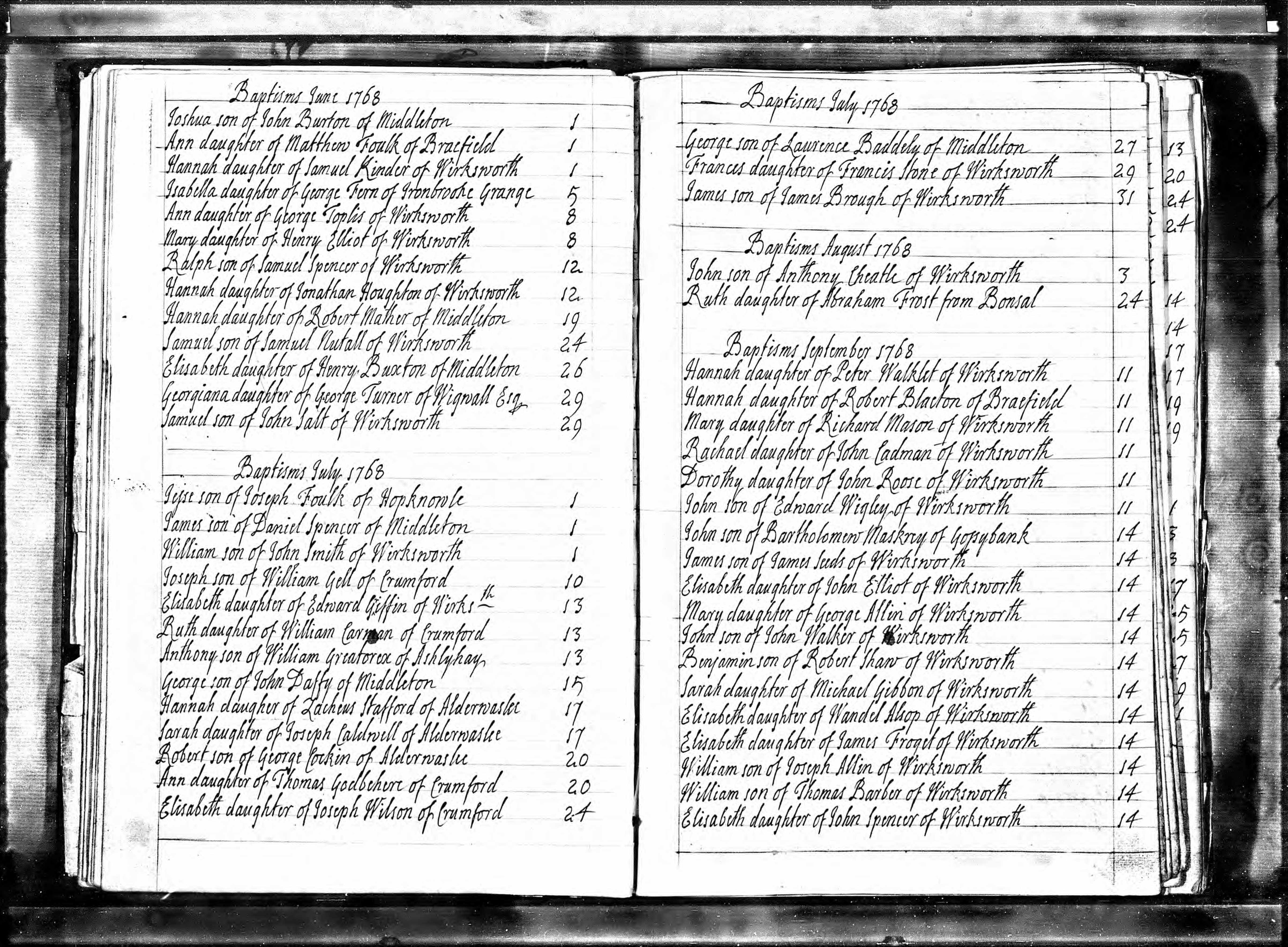
- James FROGGATT was baptised in 1770 at Wirksworth, Derbyshire to James and Ellen FROGGATT.
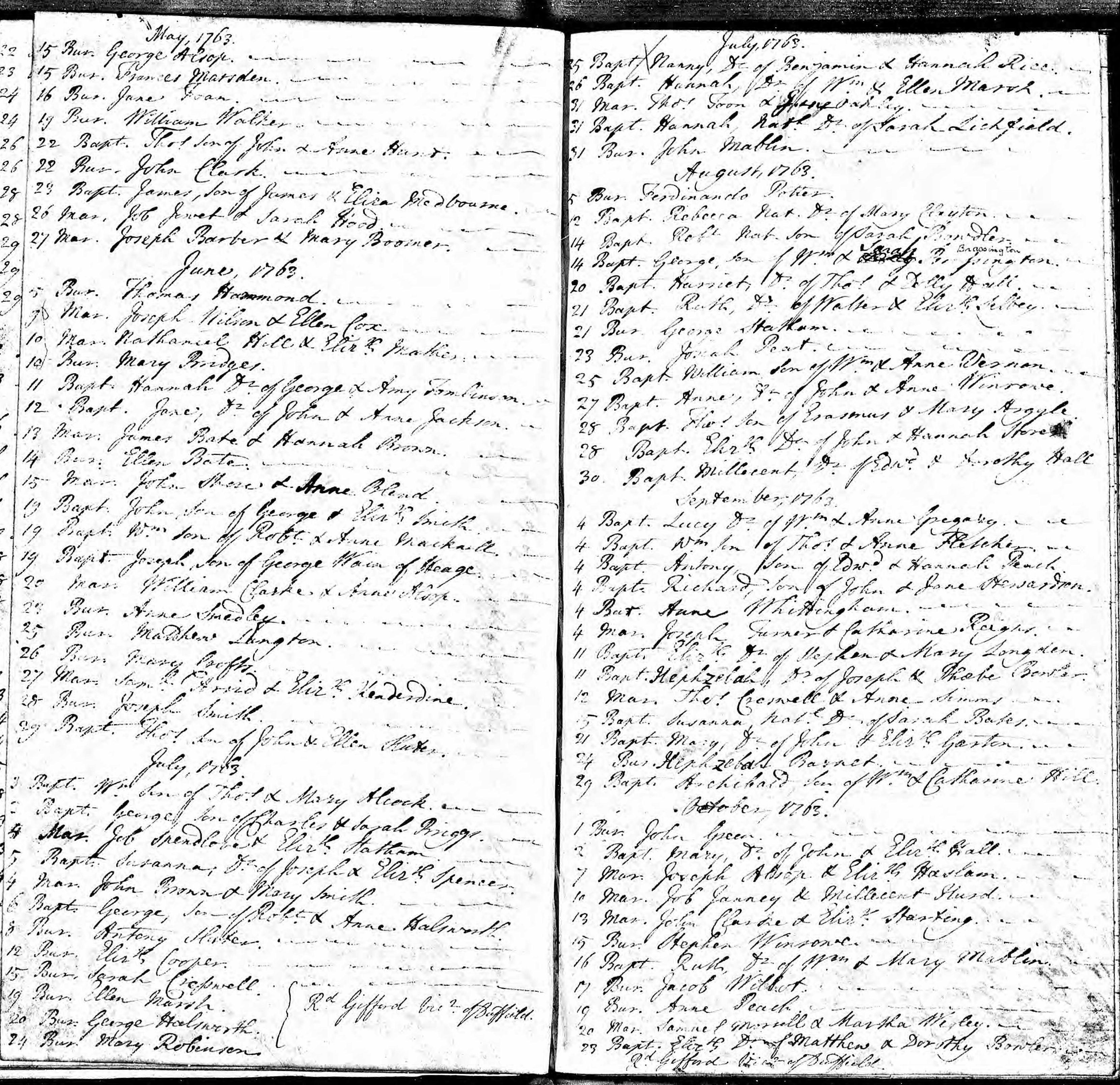
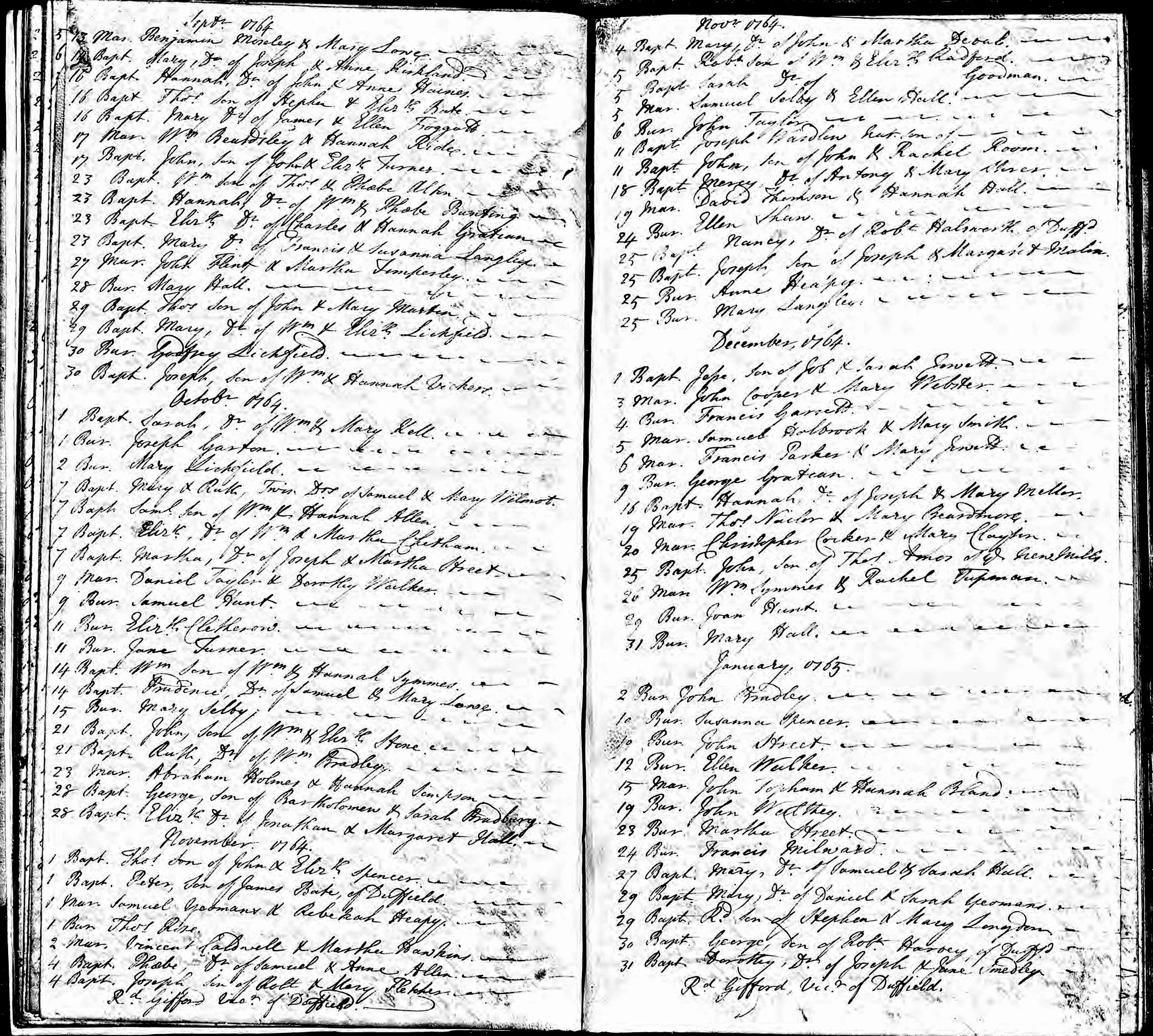
- The only marriage recorded for a James FROGGATT to an Ellen (or Helen) was that to Ellen PEACH on 17 November 1763 at Duffield St Alkmund, Derbyshire. The marriage was by licence.
- Their first child, Mary, was baptised at Duffield St Alkmund. Subsequent children were baptised at Wirksworth
- James FROGGATT was buried at Nottingham St Nicholas on 20 November 1808 and was thought to be 83 years old, so born around 1725.
- Ellen died at Brewhouse Yard in 1798, aged 73 so was also born around 1725.
If the ages at death are correct, then both James and Ellen were aged 38 when they married, rather old for the time. Perhaps both had been married before. The ages also look suspiciously rounded so may not be accurate.
Looking for a James FROGGATT born around 1725 throughout Nottinghamshire and Derbyshire draws a blank. Other researchers have looked at this problem. They have assumed that "James" was actually baptised as "John" and
either the name was entered incorrectly or John later changed his name to James.. This concept originated with a professional genealogist in the 1980s, who was employed by the Froggatt family in Australia to trace their grandfather - William FROGGATT
(1869-1946). James = John was based on the belief that the birth/baptism of this person had to be in the parish records and the assumed date of birth (1725) was correct. Thus the only known baptism that fits is for "John" in 1725 at Ashbourne St Oswald.
It is likely he was actually baptised as James but the cleric entered the wrong name; a common occurence. We also know that the parents (William and Mary) baptised a later child as "John", confirming the 1725 baptism was actually for James.
Of course the family would probably never have looked at the entry in the church register so would never have been aware of the error.
On the assumption that James was baptised as John...
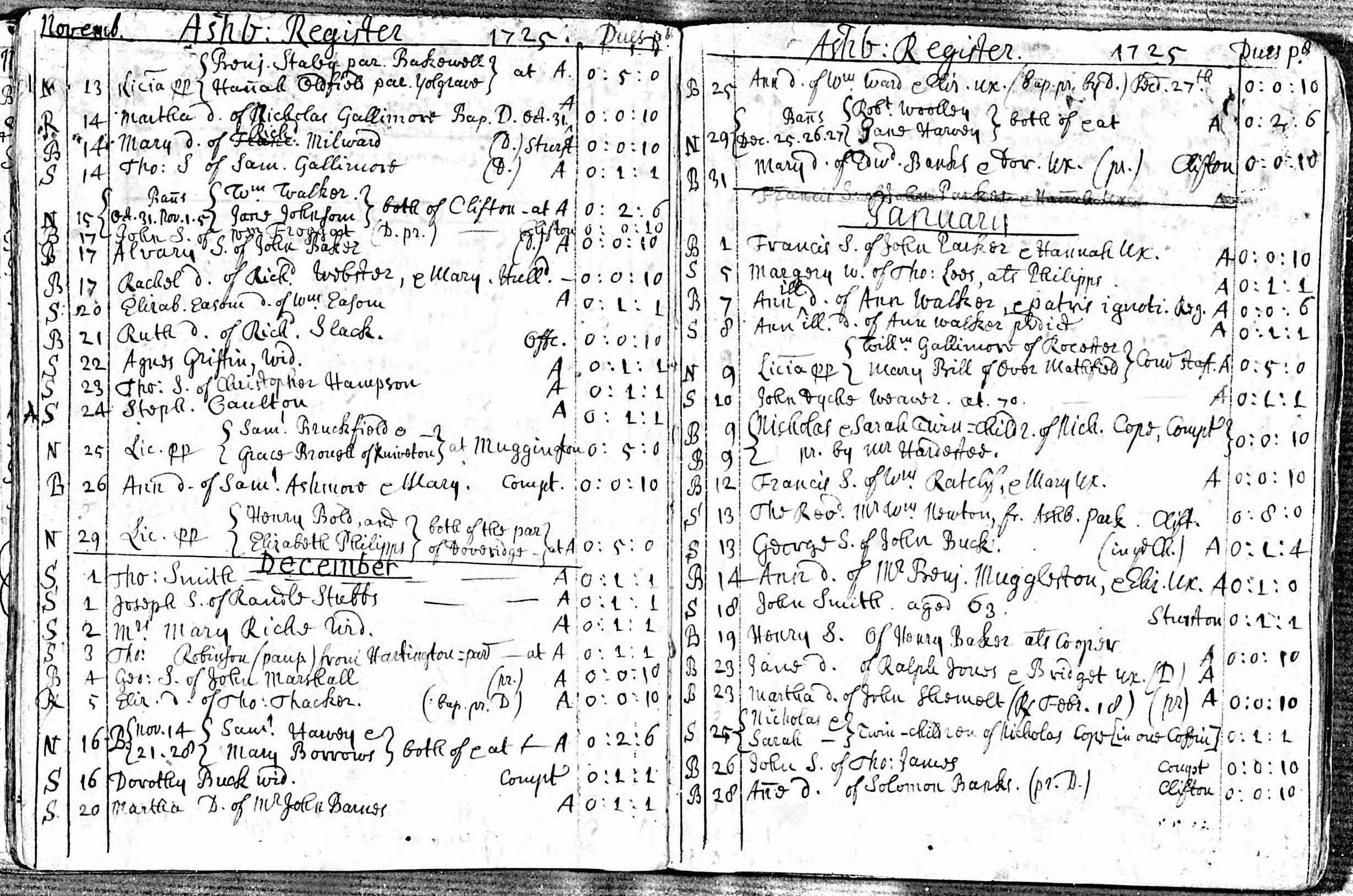
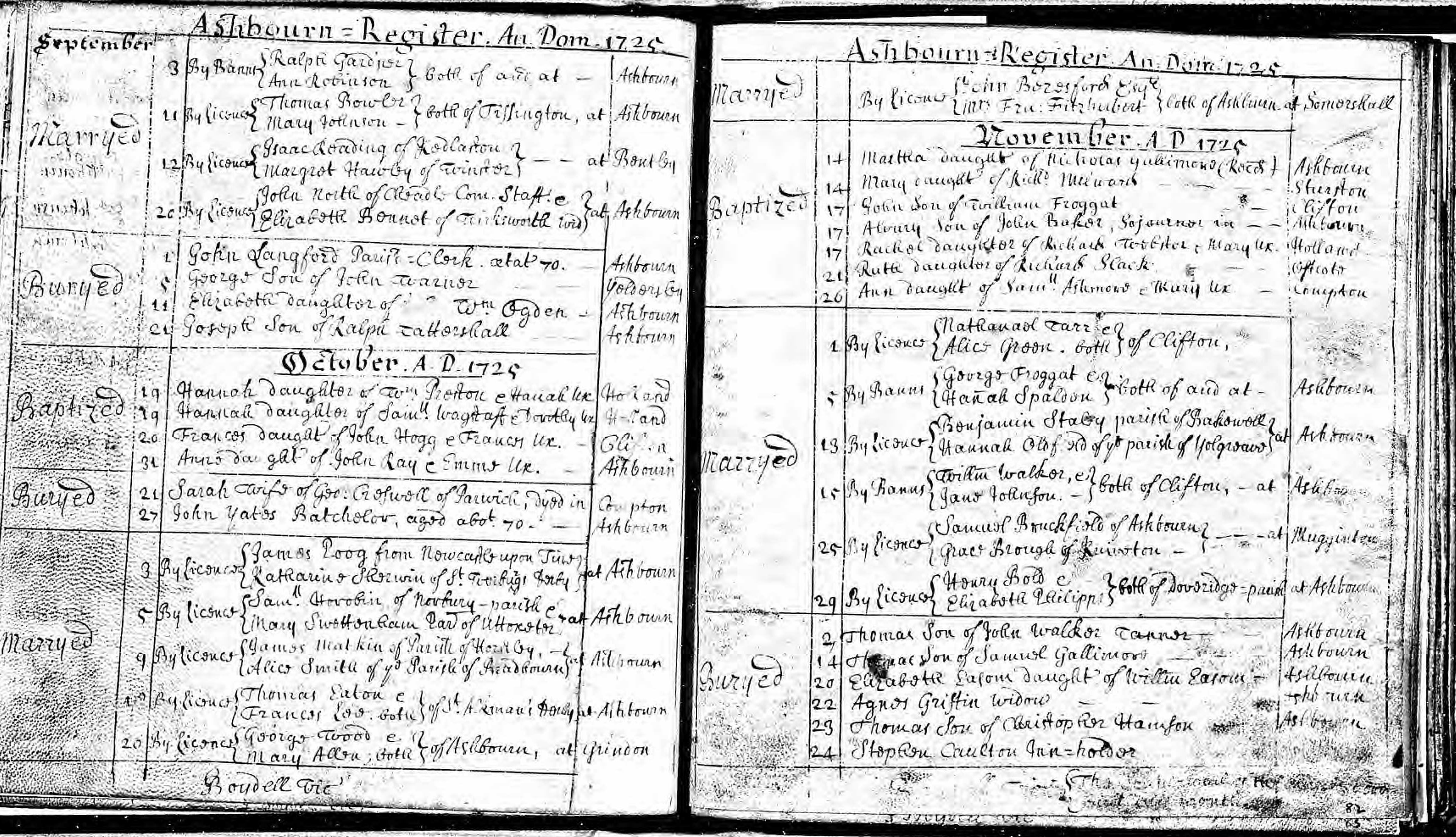
Whatever the origin, I cannot find any evidence that conclusively links the James in the 1798 marriage to the "James" baptised in St Oswald's Church Ashbourne on 17 Nov 1725, but here is the baptism record and the Bishop's Transcript. James/John was baptised privately (probably by a travelling Wesleyan Minister) and the event recorded at Ashbourne St Oswald at a cost of 10
pence.

Baptism for James (recorded as John in error) FROGGATT son of William FROGGATT of Clifton at Ashbourne St Oswald, Derbyshire. Note this version has "(b.pr.) baptised privately. |
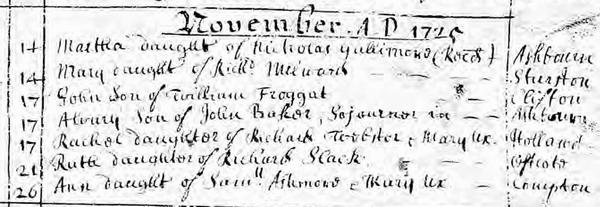
Baptism for John FROGGATT son of William FROGGATT of Clifton at Ashbourne St Oswald, Derbyshire. . |
Marriage to Ellen PEACH
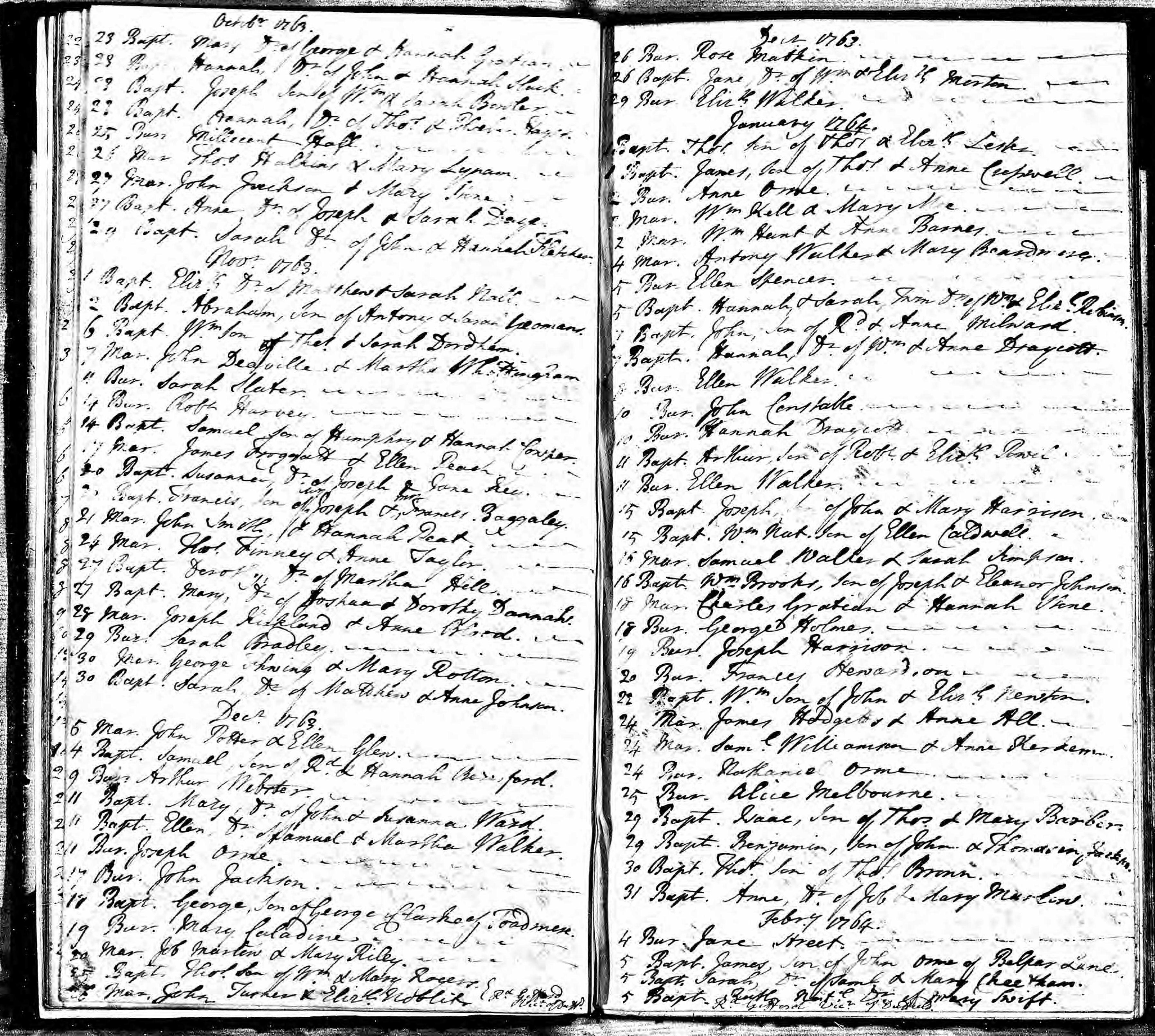
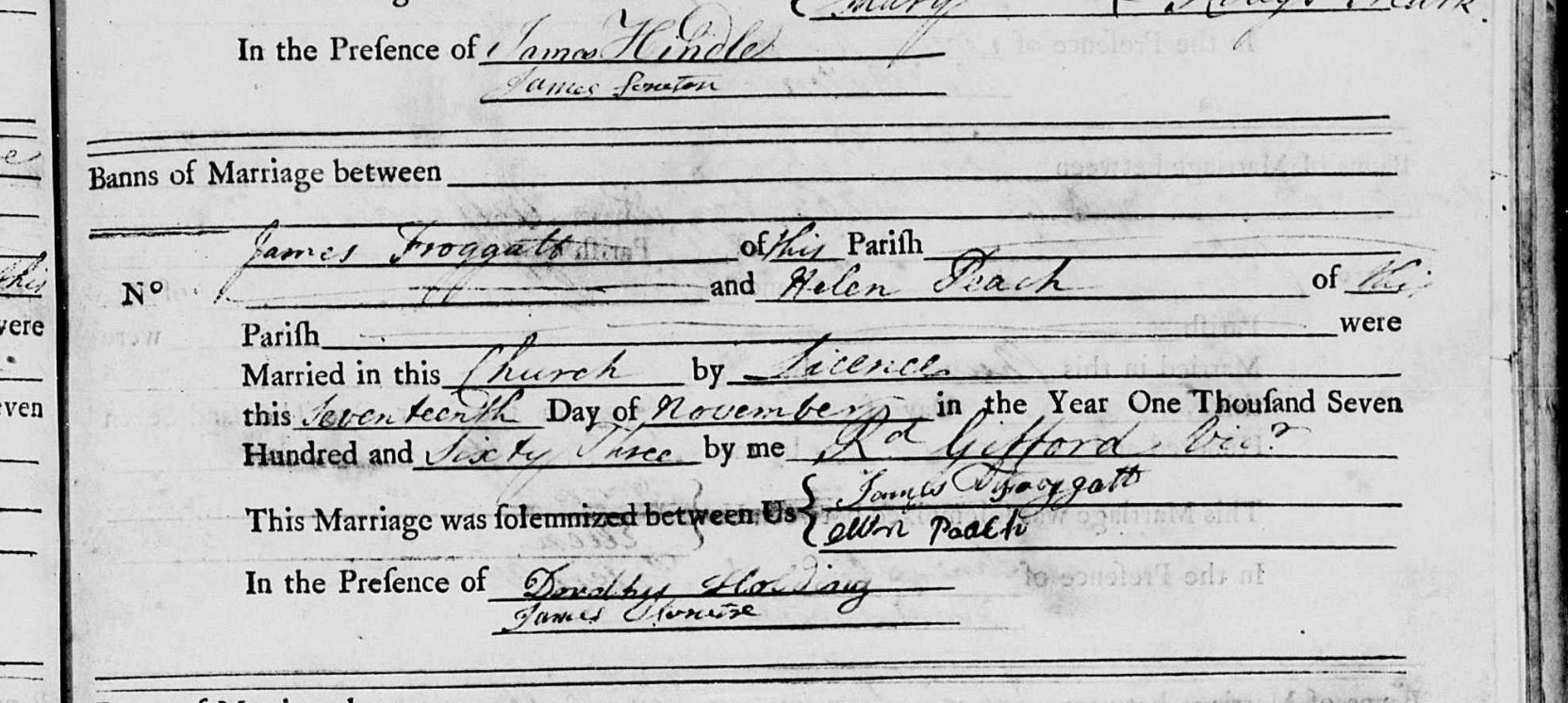
James married Ellen PEACH at St Alkmund in Duffield on 17 November 1763. In the register (they both signed with their names so could write) the bride was entered as "Helen" but she signed as "Ellen", making Ellen her actual name. The Bishop's Transcript
taken from the register shows Ellen. The marriage was by licence rather than by Banns. IF we have the correct James then he married on the same day as his baptism so was probably aged 38. Ellen was also born about 1725 (her death index in 1798 gives her age as
73) so was also aged 38. Aged 38 was unusually old for both parties, suggesting both had been married before. Neither the parish register nor the Bishop's transcript indicate the status of the parties but the
old IGI has a transcript showing "Helen PEAK" as widowed and aged 30. As the record does not link to an image the veracity of this record cannot be checked.

Bishop's Transcript for the marriage for James FROGGATT and Ellen PEACH at Duffield, Derbyshire. |
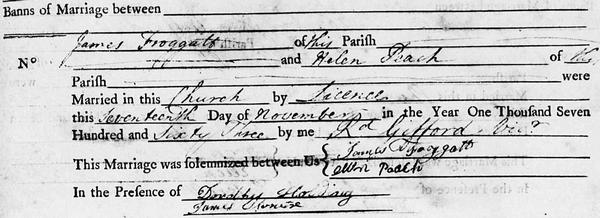
St Alkmund Duffield marriage register for James FROGGATT and Ellen PEACH. |
Was James FROGGATT previously married?
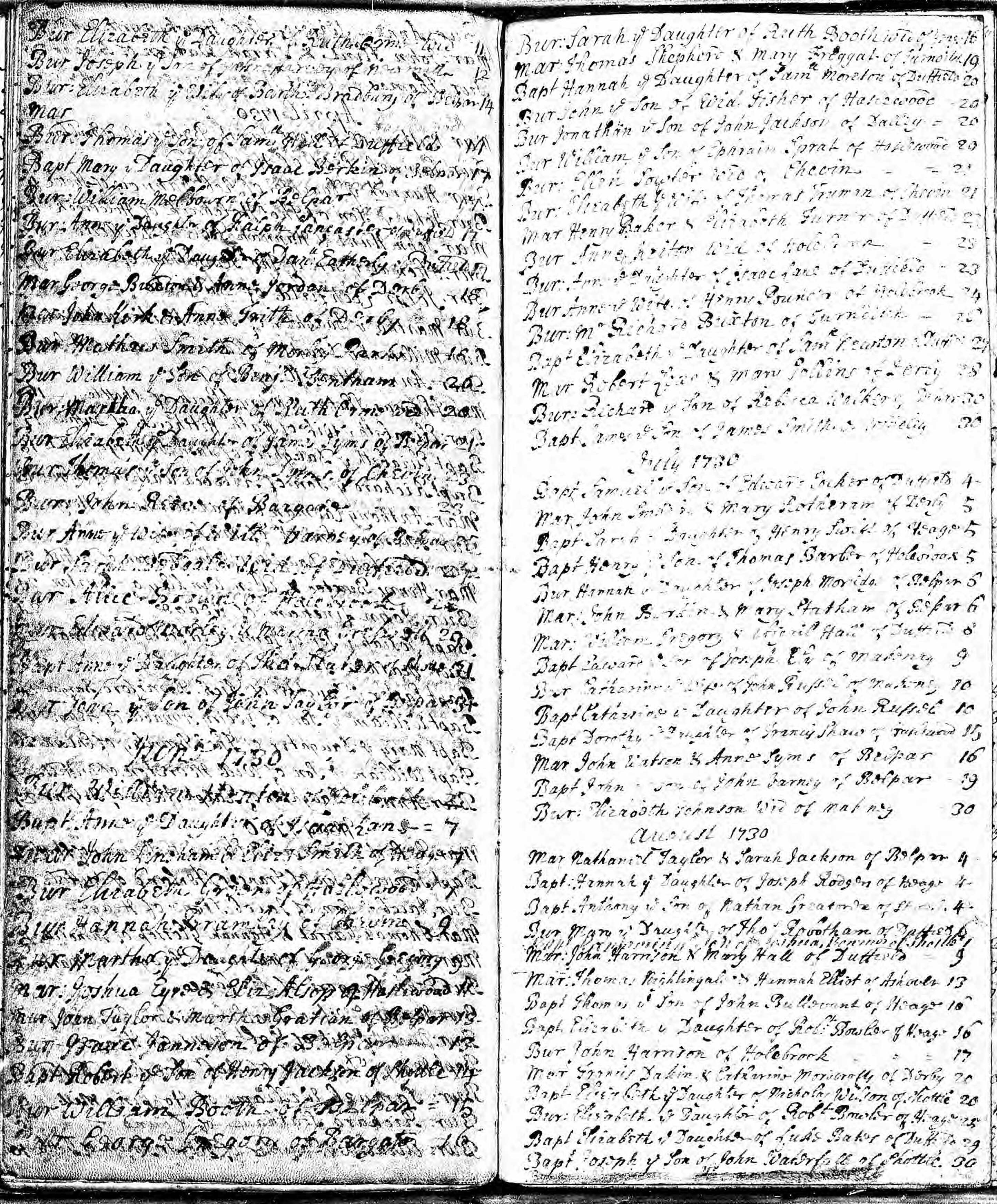
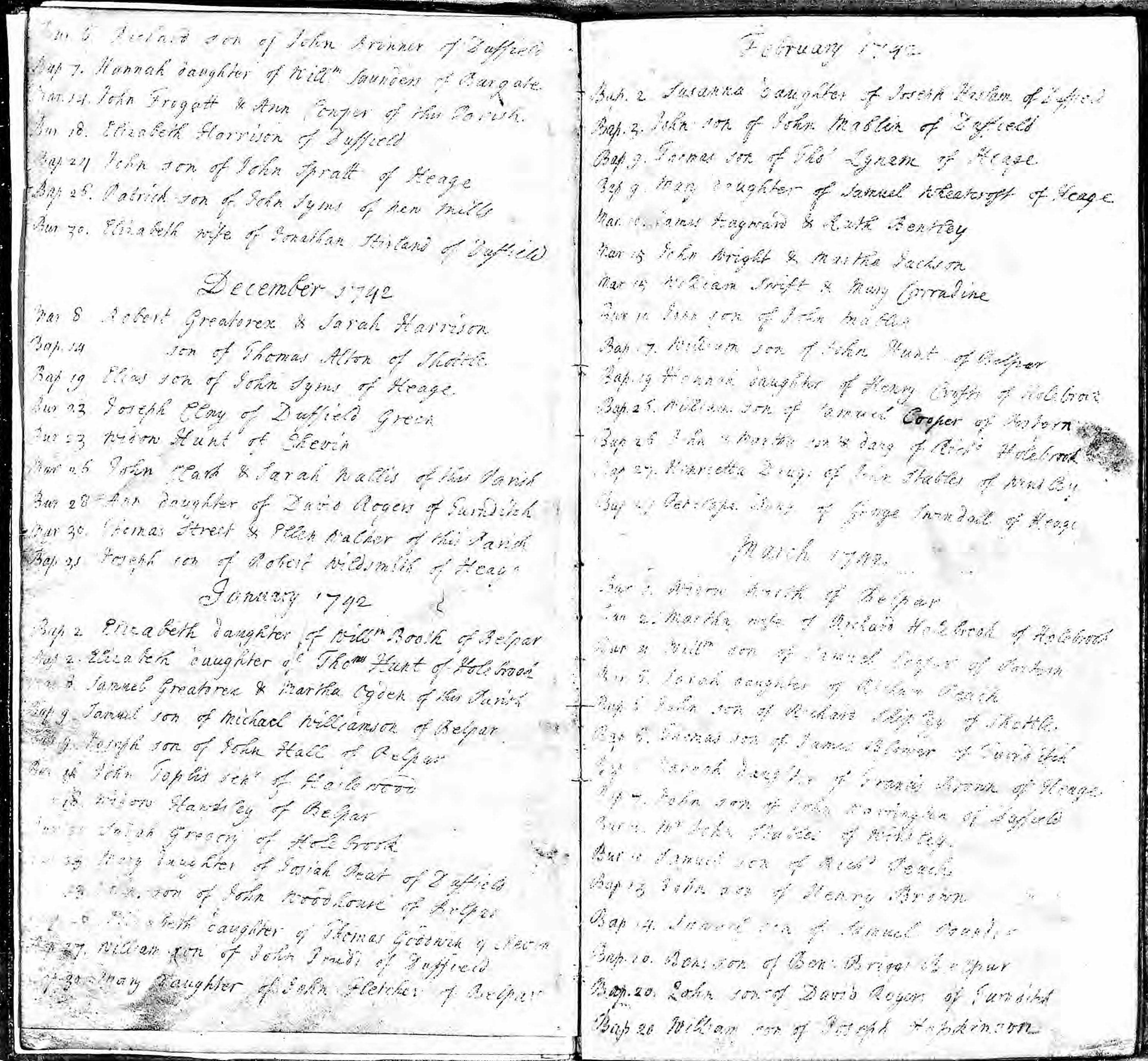
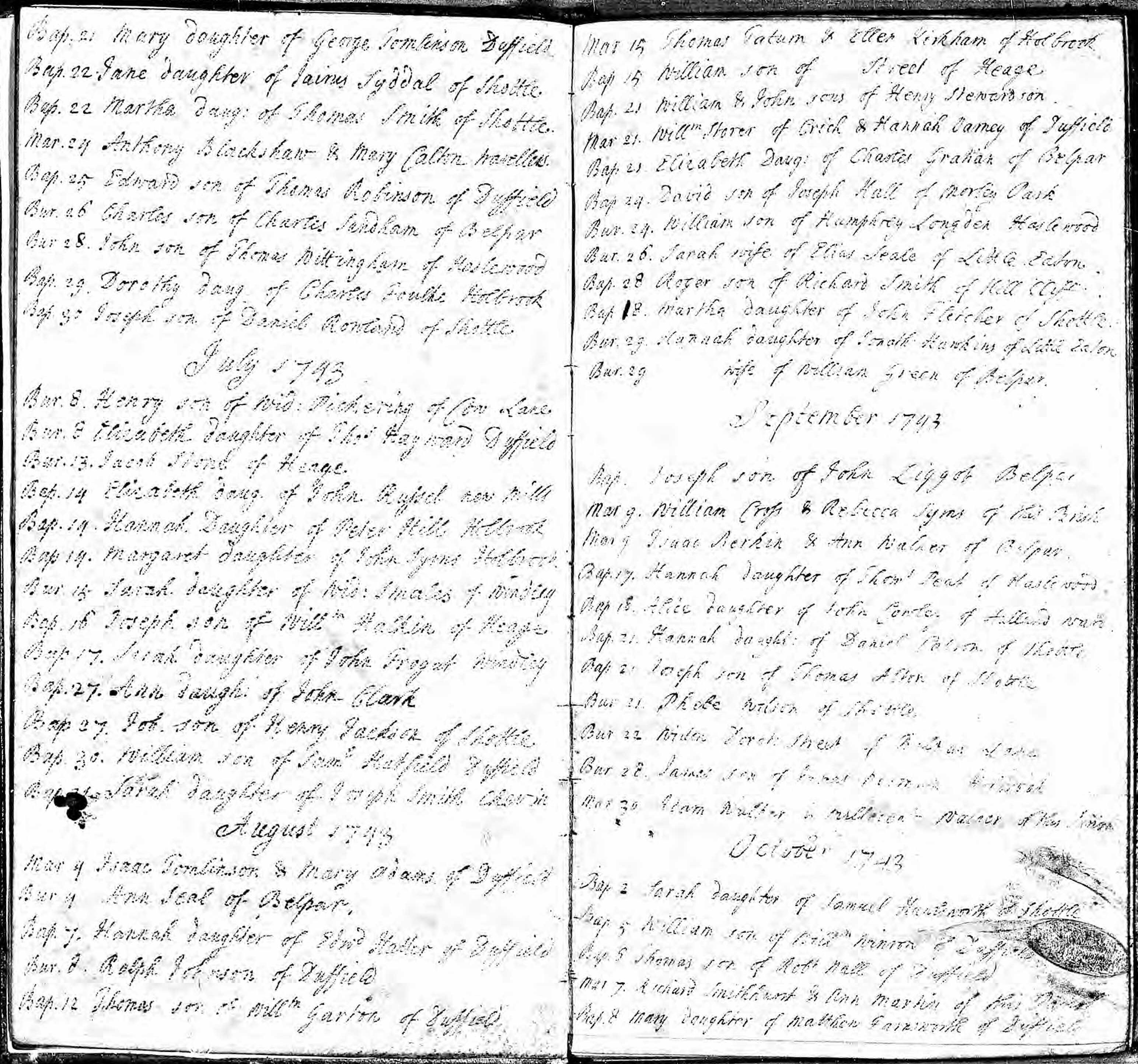
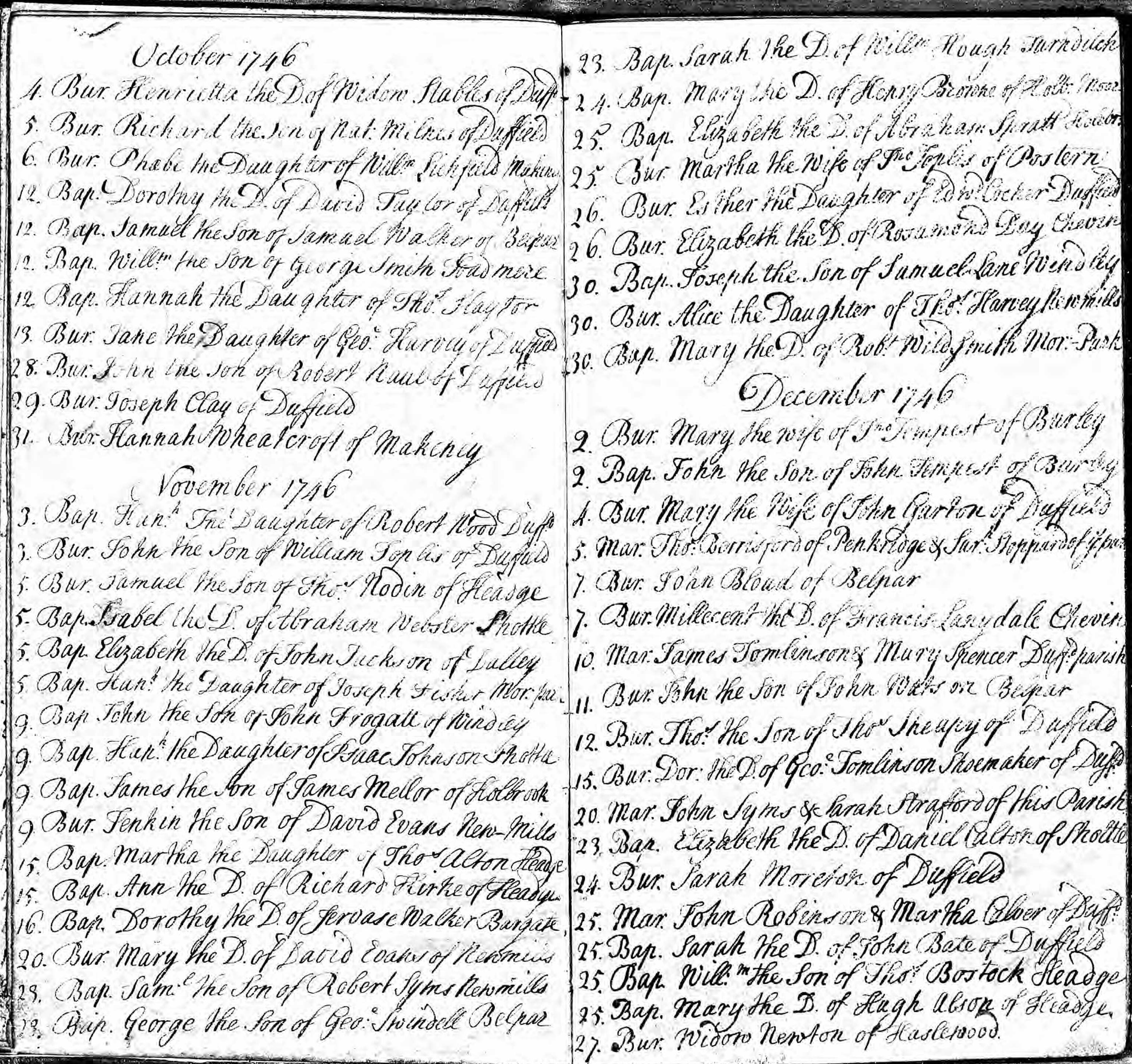
Assuming James/John was born in 1725, then he was aged 38 when he married Ellen PEACH, so he was likely to have been married before. There is a marriage at Duffield St Alkmund on 14 November 1742 of John FROGGATT and Ann COWPER (or COWYER) and
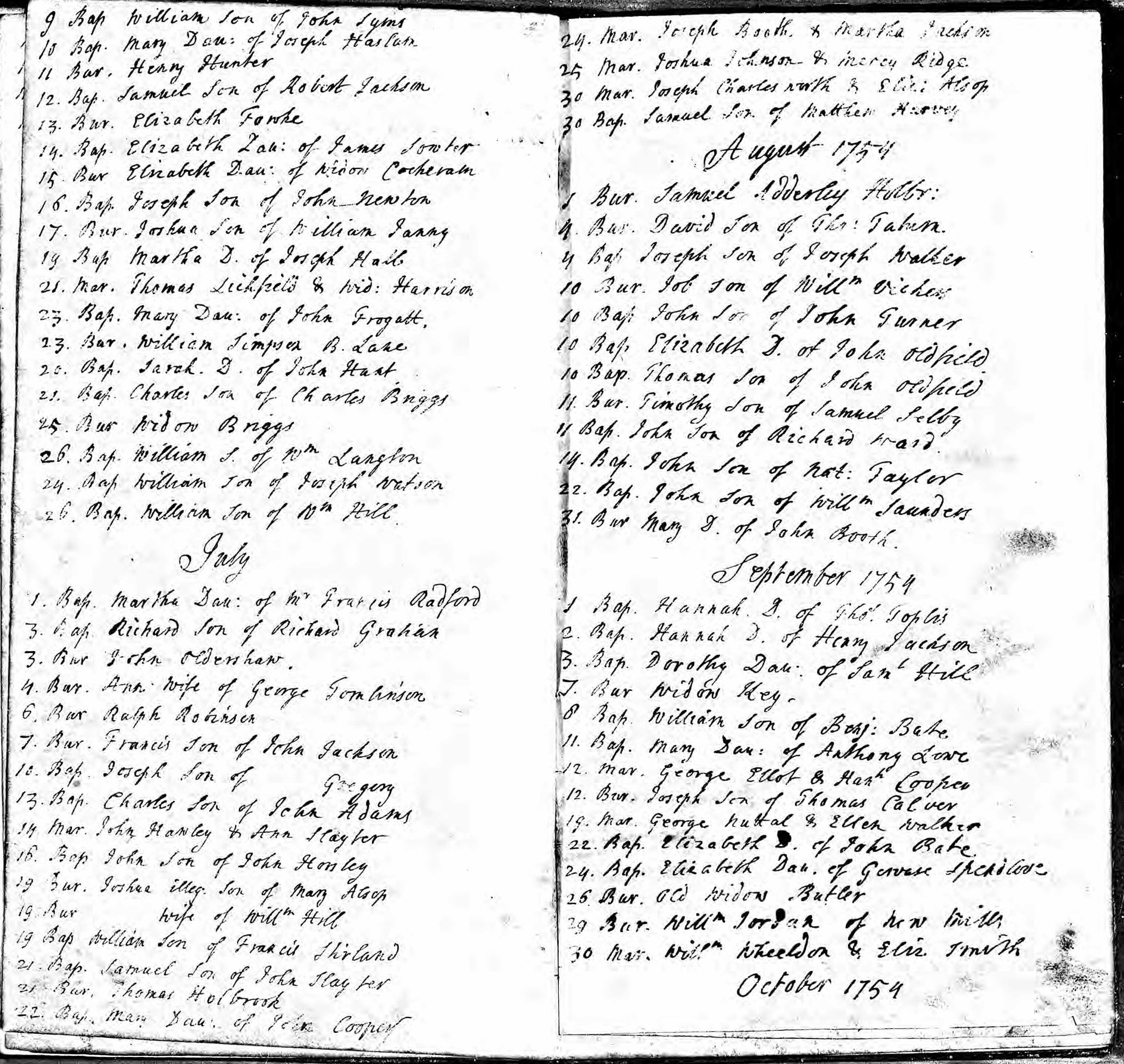
the marriage of Mary FROGGATT to Thomas SHEPHERD (19 Jun 1730), indicating there was a Froggatt family living in this area by 1730. There are also the baptisms with father John FROGGATT of Sarah (17 Jul 1743; John (9 Nov 1746); and Mary (23 Jun 1754).
This Mary later married Thomas HOUGH on 28 March 1769. There is also the burial of Rachel FROGGATT on 30 October 1763
However, this John FROGGATT is too young to be John the son of William and Mary, baptised in Ashbourne in 1725. BY 1742 this John would have been only 17 years old, probably too young to marry. So the John married in 1742 did not later became
the James who married Ellen PEACH.
If James Froggatt had been married prior to his marriage to Ellen, there is no obvious record of the event, even allowing for his name as John or James.
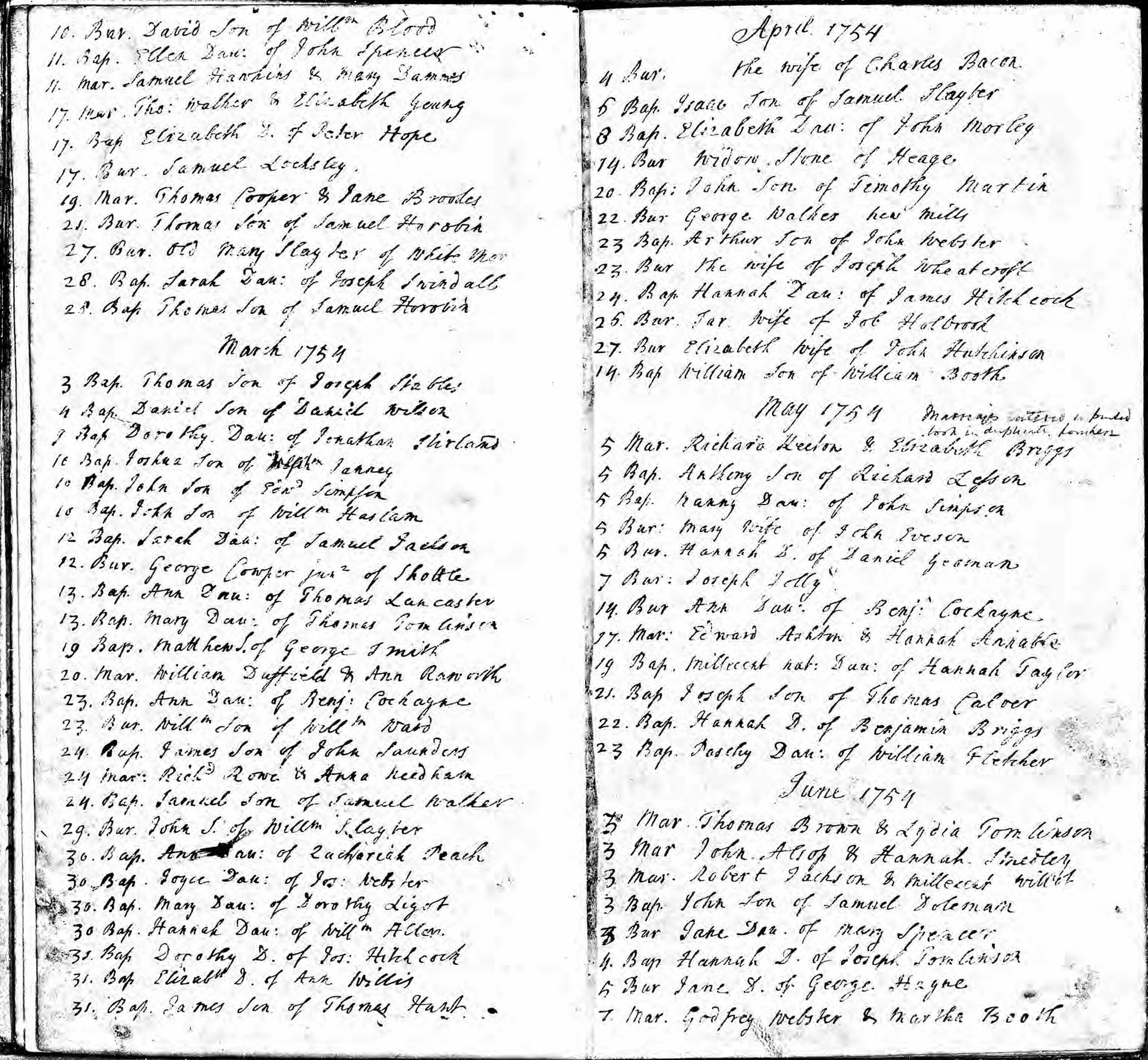
Events at Duffield that demonstrate a Froggatt family lived there from about 1730

1730 marriage of Mary FROGGATT at Duffield St Alkmund, Derbyshire to Thomas SHEPHERD. |

1742 marriage of John FROGGATT to Ann COWPER at Duffield St Alkmund, Derbyshire. |

1743 baptism of Sarah FROGGATT daughter of John at Duffield St Alkmund, Derbyshire. |

1746 baptism of John FROGGATT son of John at Duffield St Alkmund, Derbyshire. |

1754 baptism of Mary FROGGATT daughter of John at Duffield St Alkmund, Derbyshire. |
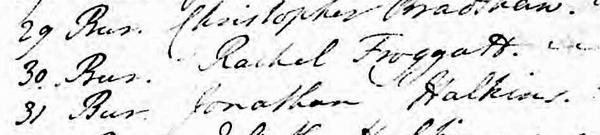
1762 burial of Rachel FROGGATT at Duffield St Alkmund, Derbyshire. No father named, so Rachel would have been an adult. She may have been the Rachel FROGGATT baptised at Ashbourne St Oswald on 7 Dec 1729 to William & Mary FROGGATT. |

1769 marriage of Mary FROGGATT at Duffield St Alkmund, Derbyshire to Thomas HOUGH. ThIs is the Mary baptised in 1754 as John Froggatt's will leaves his estate to a Thomas HOUGH, his nephew. |
Was Ellen PEACH previously married?
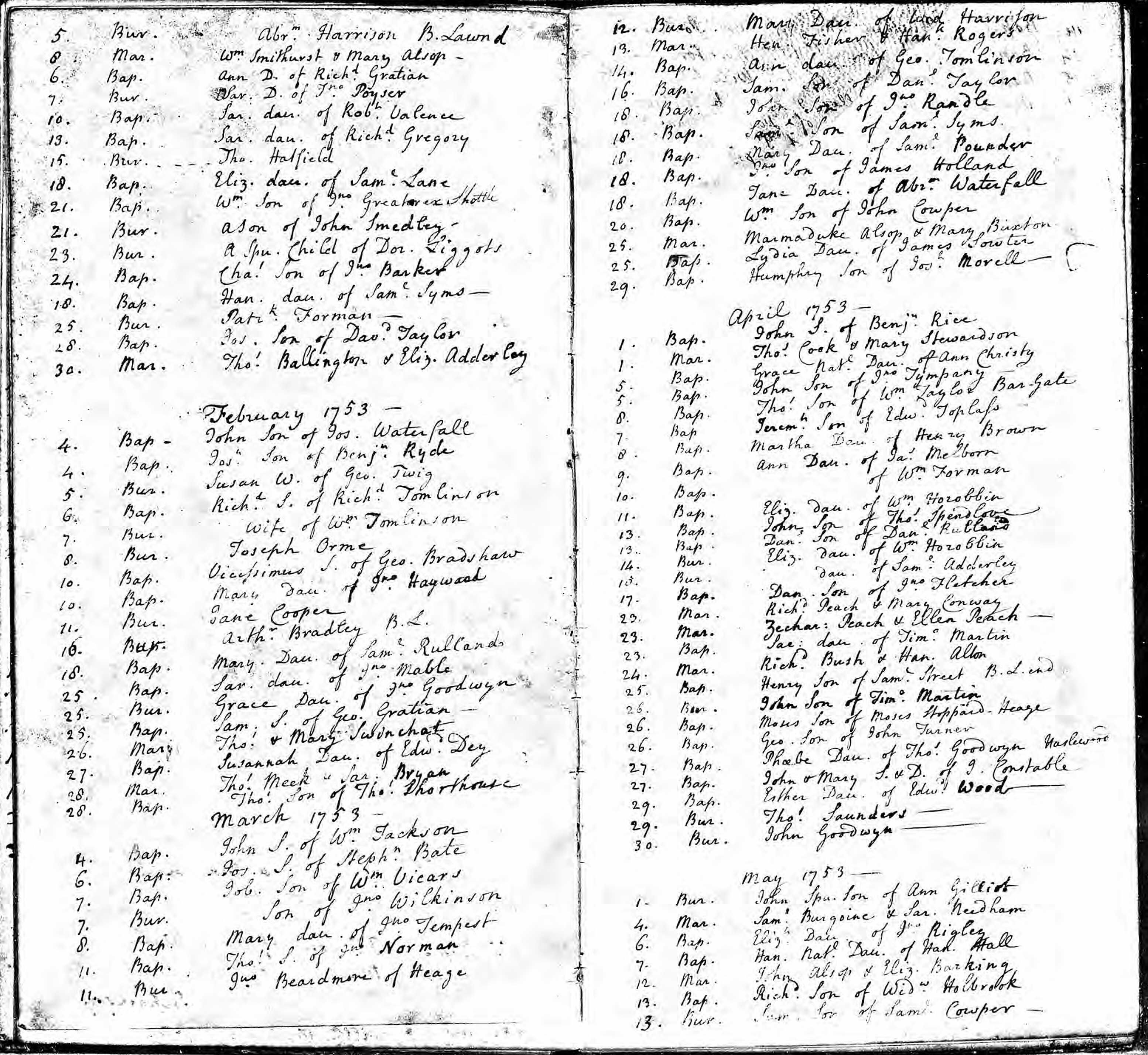
There was a double marriage at Duffield St Alkmund on 23 April 1753 for Richard PEACH and Ellen PEACH (siblings) to Mary CONWAY and Zachariah PEACH respectively. In 1754 is the baptism of Ann PEACH to Zachariah and on 19 OCtober 1763 her burial.
There are no other records for Zachariah but we can presume he died before Ellen married James Froggatt on 17 November 1763..

Marriage for Zachariah PEACH to Ellen PEACH at Duffield, Derbyshire. |

Baptism for Ann, daughter of Zachariah PEACH at Duffield St Alkmund on 30 August 1754. |

Burial for Ann, daughte of Zachariah PEACH at Duffield St Alkmund on 19 October 1763. |
The family of James and Ellen FROGGATT
James and Ellen are known to have had 4 children, all baptised in Derbyshire:
| Name |
Date of baptism |
Place |
Date of Death |
Place |
| Mary |
16 Sept 1764 |
Duffield |
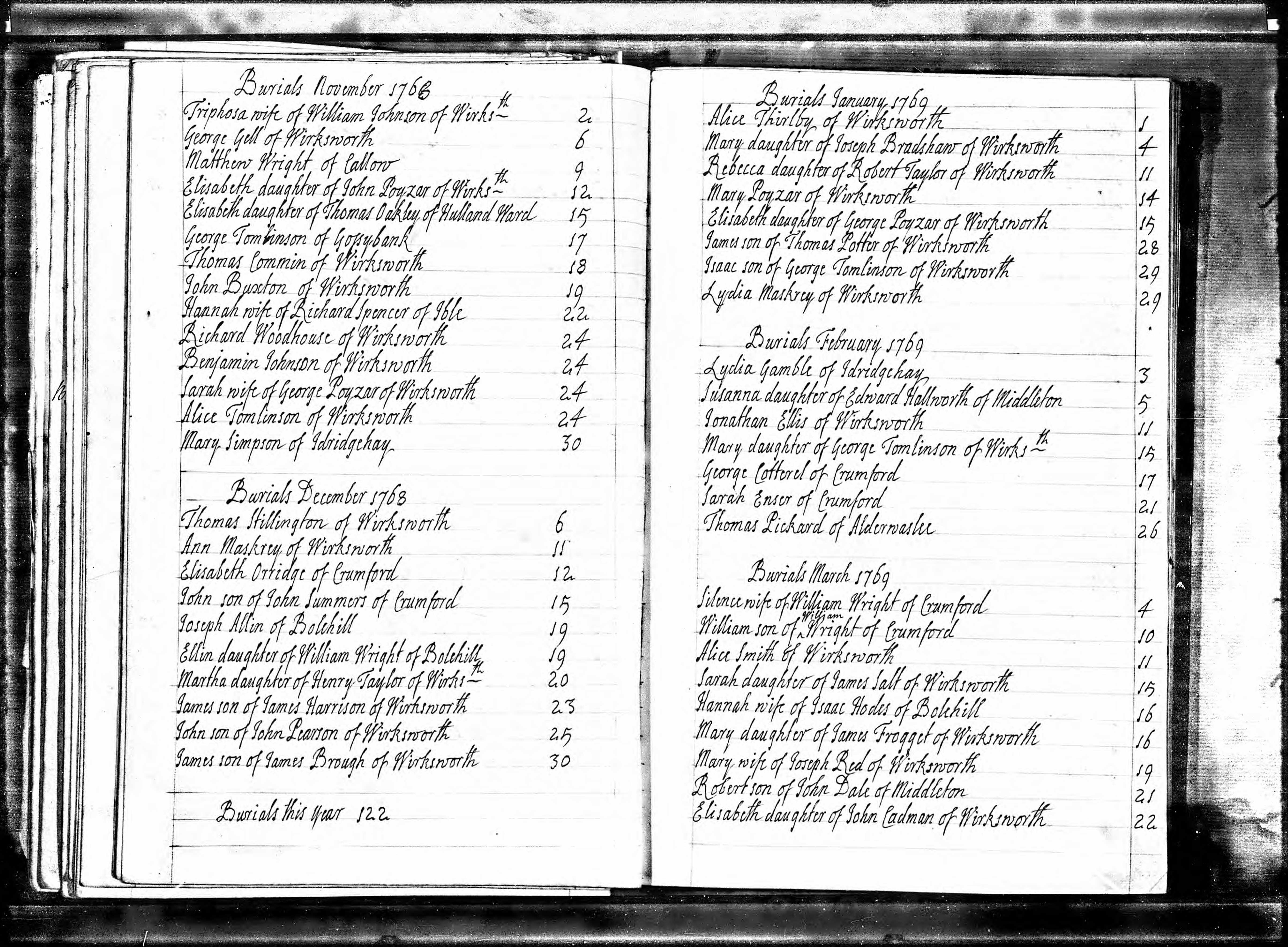
16 March 1769 |
Wirksworth |
| Elizabeth |
18 Sept 1767
14 Sept 1768 |
Duffield
Wirksworth |
after 1803 |
|
| James |
12 Sept 1770 |
Wirksworth |
2 Jan 1824 |
Nottingham |
| Hannah |
13 Sept 1775 |
Wirksworth |
after 1794 |
|

1764 Baptism for Mary FROGGATT at Duffield, Derbyshire. |

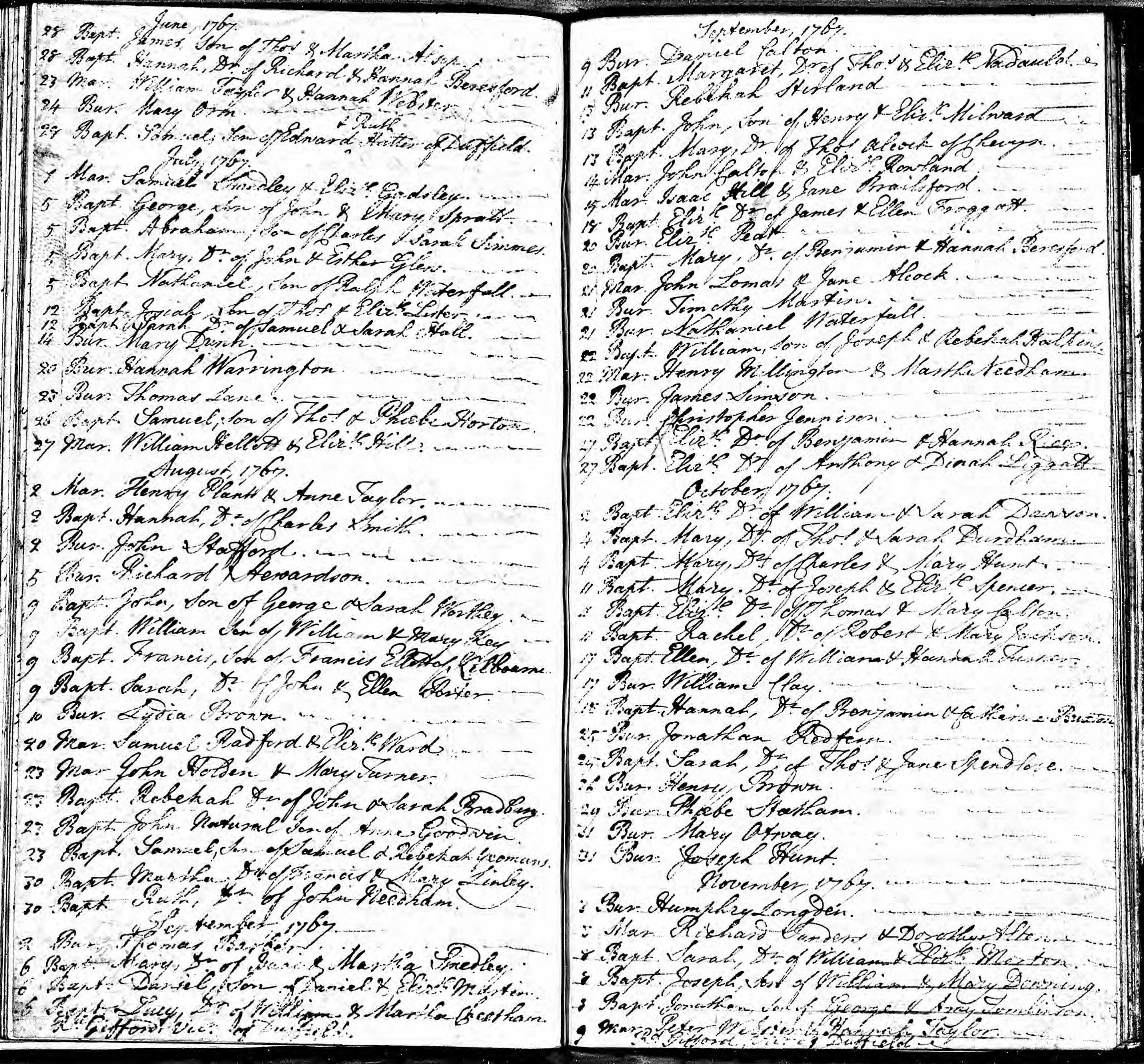
1769 Burial for Mary FROGGATT at Wirksworth, Derbyshire. |

1767 Baptism for Elizabeth FROGGATT at Duffield, Derbyshire. |

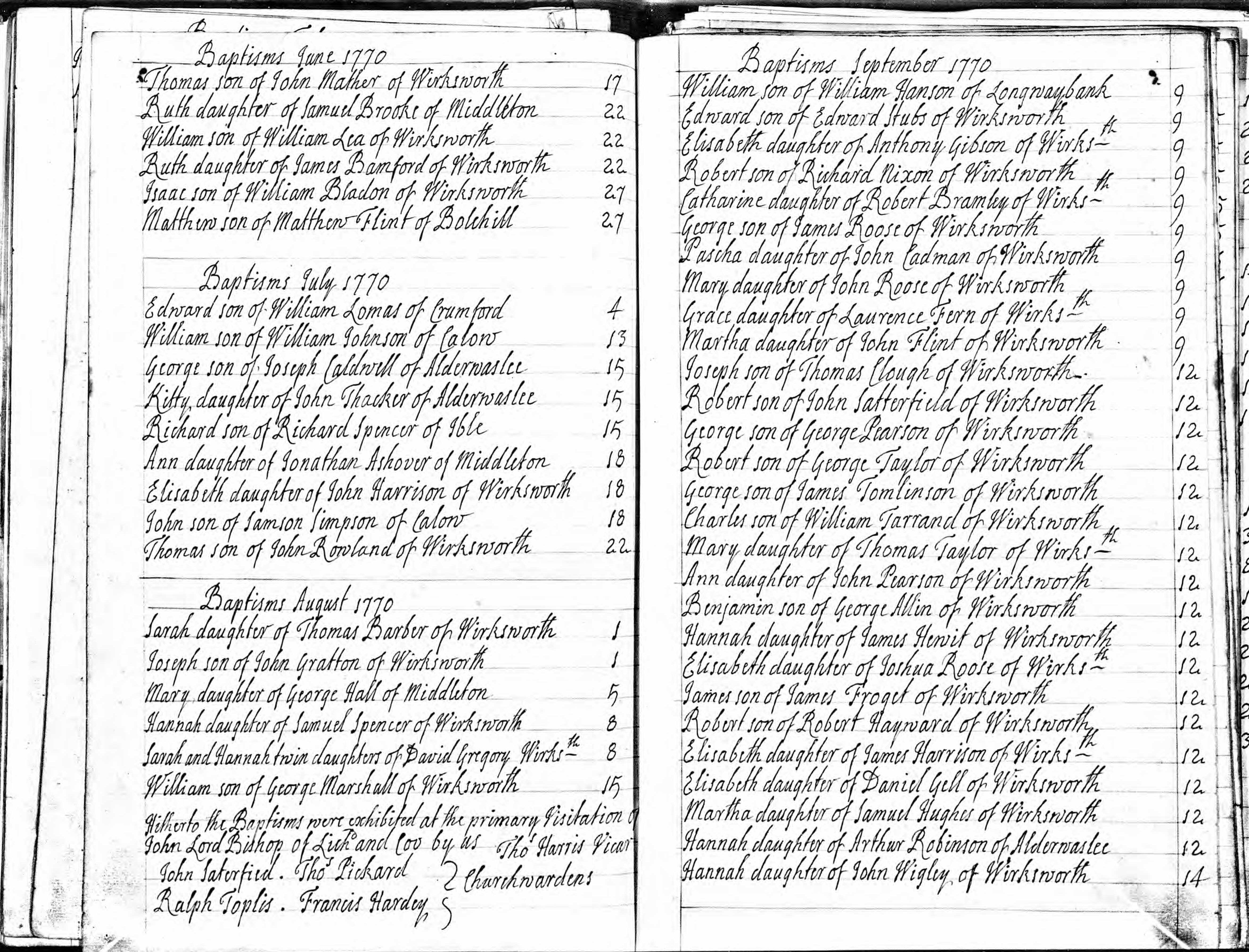
1770 Baptism for James FROGGATT at Wirksworth, Derbyshire. |

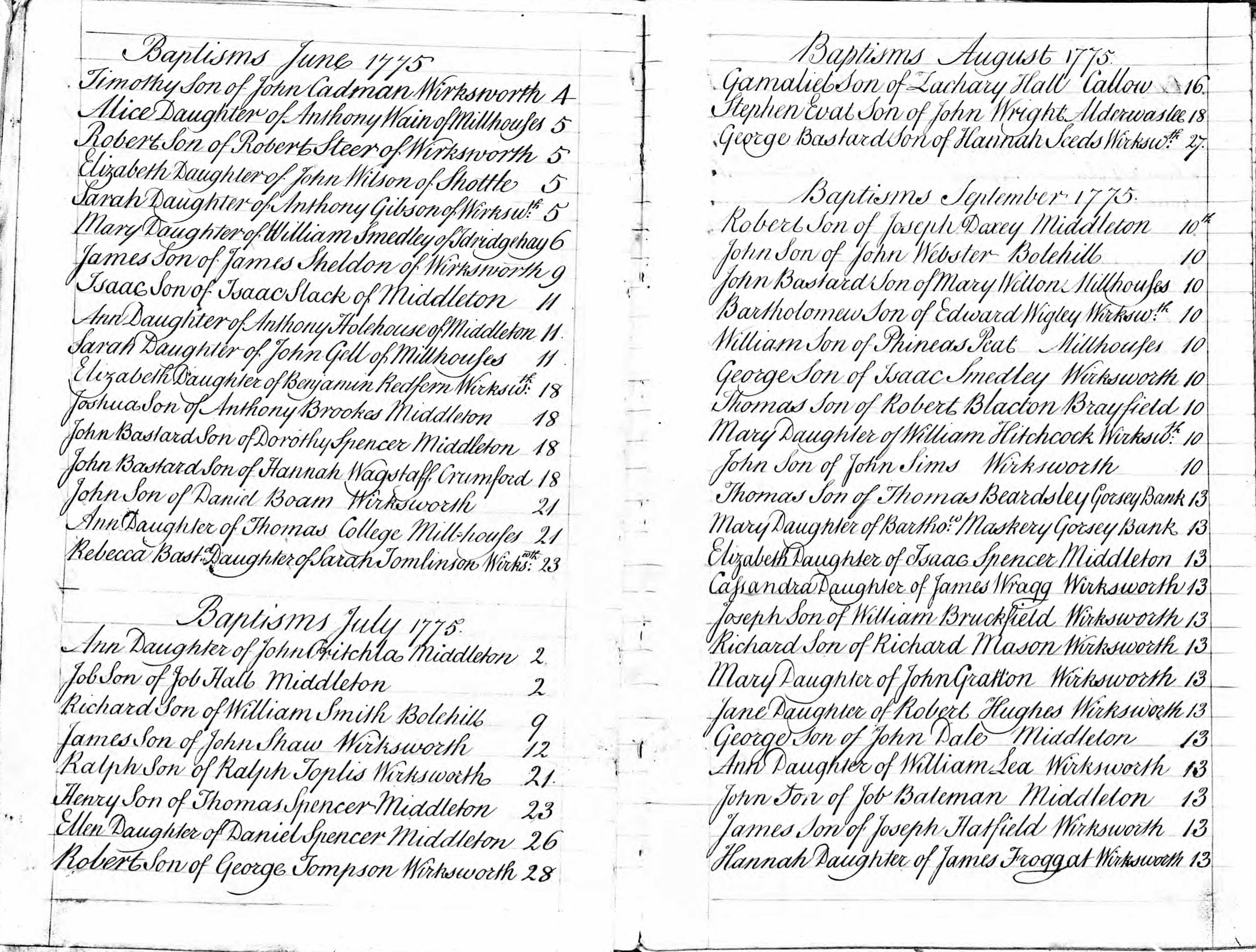
1775 Baptism for Hannah FROGGATT at Wirksworth, Derbyshire. |
James and Ellen moved from Duffield to Wirksworth sometime between September 1767 and September 1768 and moved on to Nottingham before November 1794 (when daughter Hannah married). Their earlier occupations are unknown but they were likely
to have been agricultural workers and were drawn to Nottingham by the availability of employment as framework knitters.
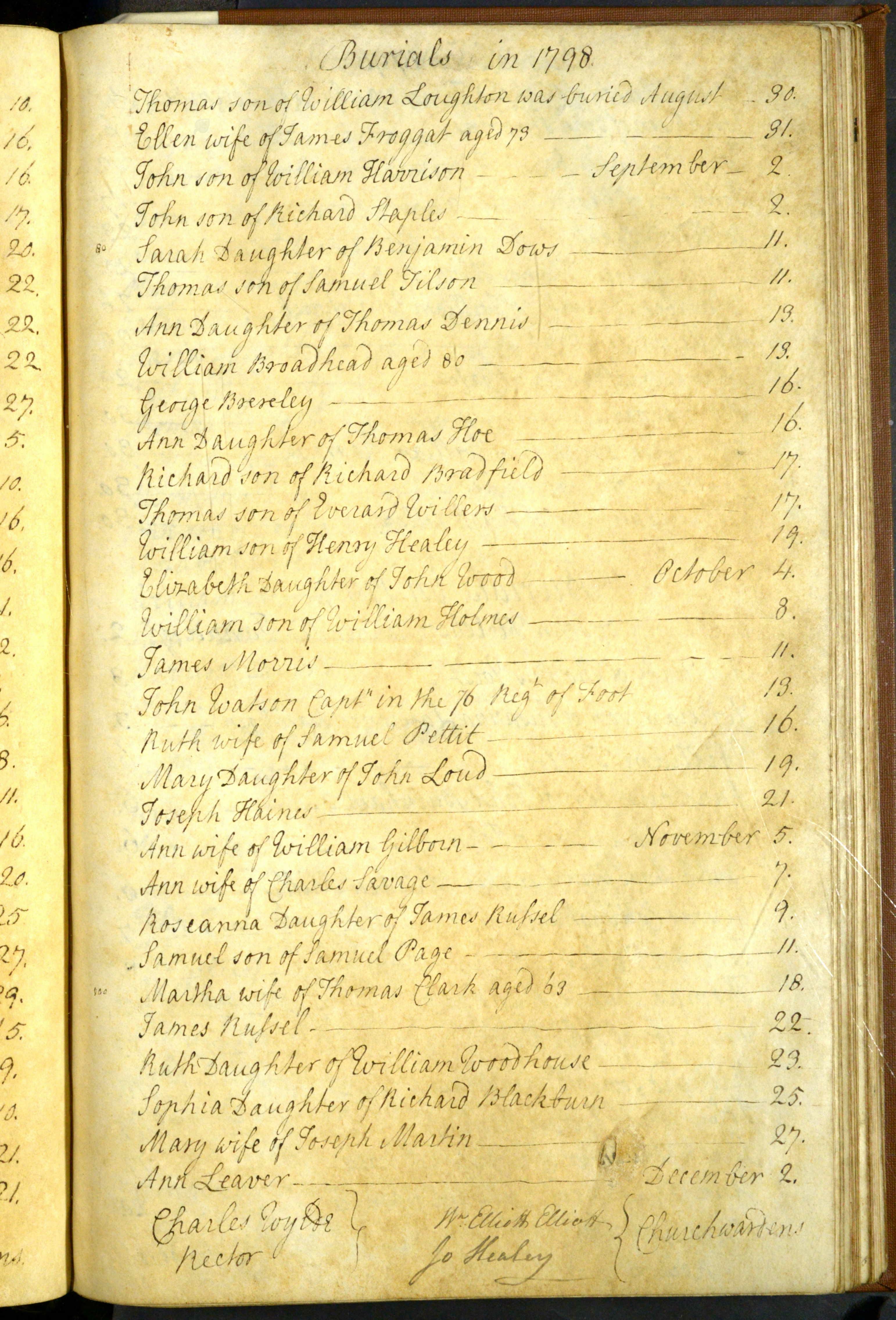
Ellen Froggatt died in Nottingham and was buried on 31 August 1798. The burial record for Nottingham St Nicholas gives her age as 73 suggesting she was born around 1725.

Burial of Ellen FROGGATT at Nottingham St Nicholas, aged 73 so born around 1725.
|
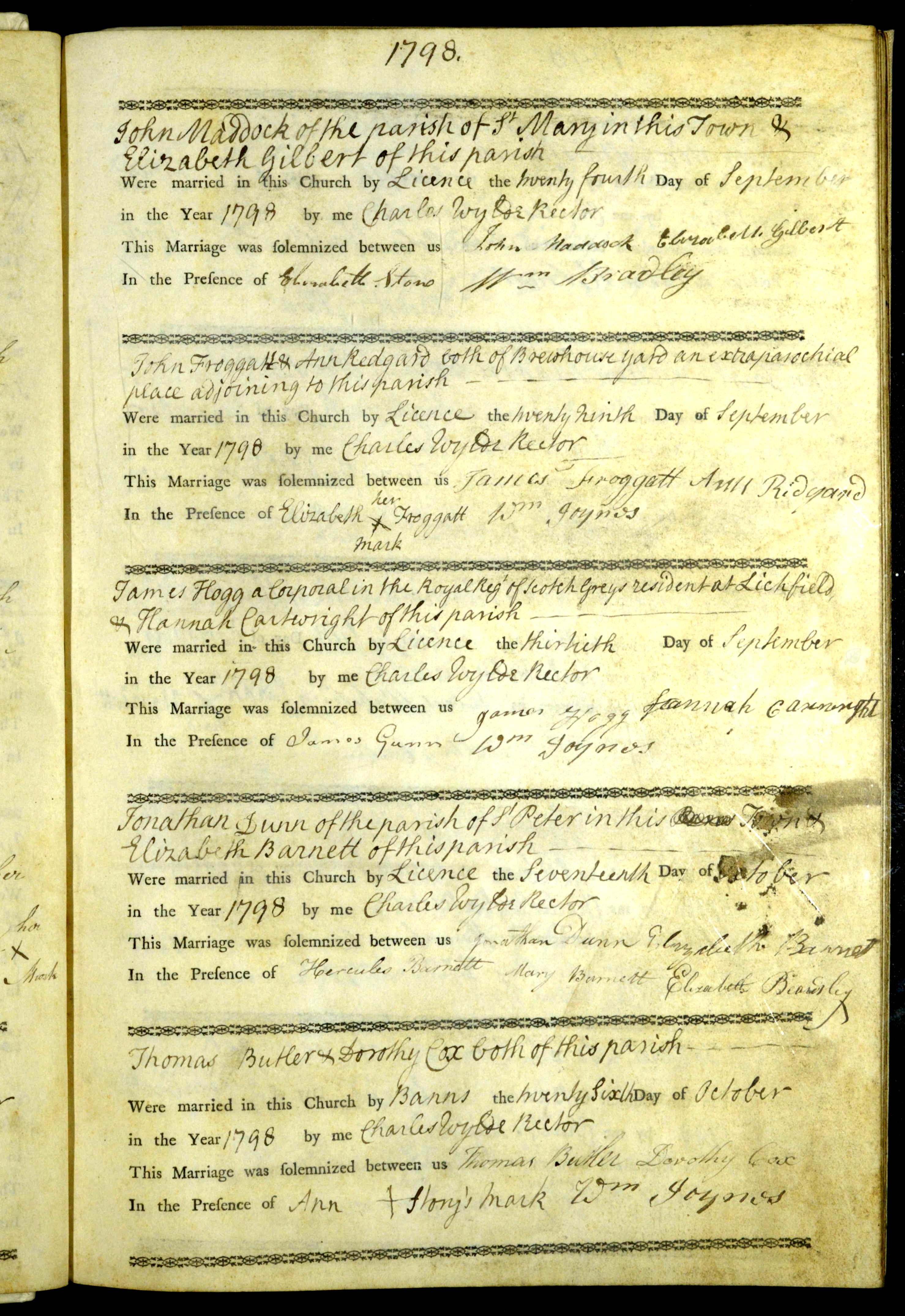
Marriage of William FROGGATT to Ann REDGARD 29 September 1798
The first record we have of a FROGGATT living at Brewhouse Yard is the marriage of James to Ann REDGARD at St Nicholas in Nottingham on 29 September 1798:
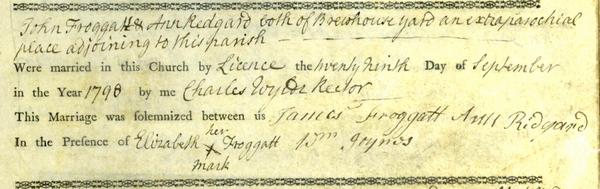
Marriage of James FROGGATT to Ann REDGARD at Nottingham St Nicholas. Note that although the Rector wrote "John" the signature was "James".
The witness was Elizabeth FROGGATT - James' daughter.
|
Both James and Ann signed their names, but the witness, Elizabeth Froggatt (James' daughter) signed with her mark although she was aged about 31.
Ann REDGARD had been resident at Brewhouse Yard for several years prior, being recorded as paying Land Taxes to Cornelius Launder (proprietor) of 5 shillings per year for 1791 to 1798. Ann was likely to have been a widow if she was the occupier
and named as paying the tax. It would appear that after the marriage James Froggatt moved into Ann’s residence presumably with his children Elizabeth and James (Hannah having married Samuel GODKIN in 1794), for he is recorded as paying the land tax on
the same residence in the following years. Although a James Froggatt is recorded as paying the tax from 1799 to 1819, James (I) died in 1808 and Ann in 1814, so we can conclude that James (II) lived at the same address and
continued to pay the tax. In 1807 the property was described as “one dwellinghouse and garden”.
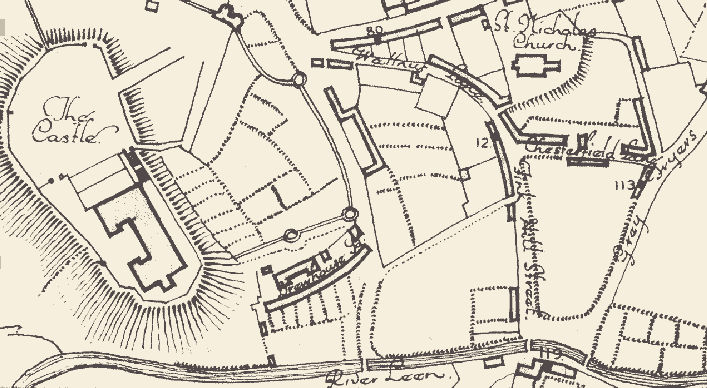
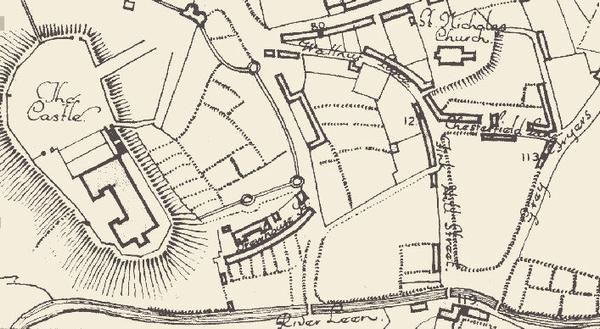 Badder & Peat map of Nottingham and Brewhouse Yard. The long building on the south side of the yard with the gardens behind was owned by Cornelius Launder and would have been where 4 generations of Froggatts resided
from 1798 – c.1833: James & Ellen, James & Mary, William & Elizabeth and their children.
Badder & Peat map of Nottingham and Brewhouse Yard. The long building on the south side of the yard with the gardens behind was owned by Cornelius Launder and would have been where 4 generations of Froggatts resided
from 1798 – c.1833: James & Ellen, James & Mary, William & Elizabeth and their children. |
The Death and Will of James Froggatt
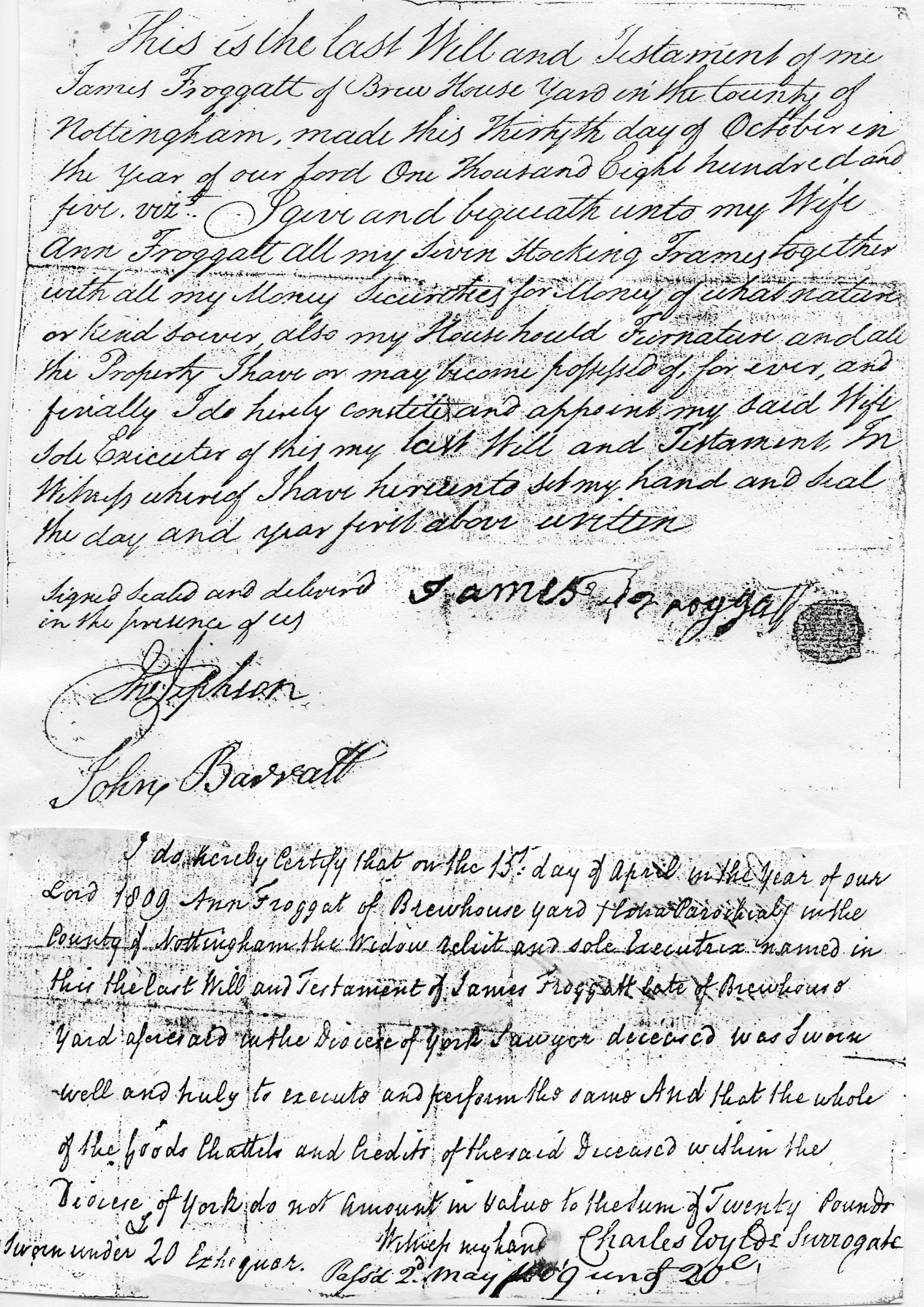
James Froggatt died in Nottingham on 20 November 1808. In his Will he left all his possessions, including 7 stocking frames to his wife Ann.
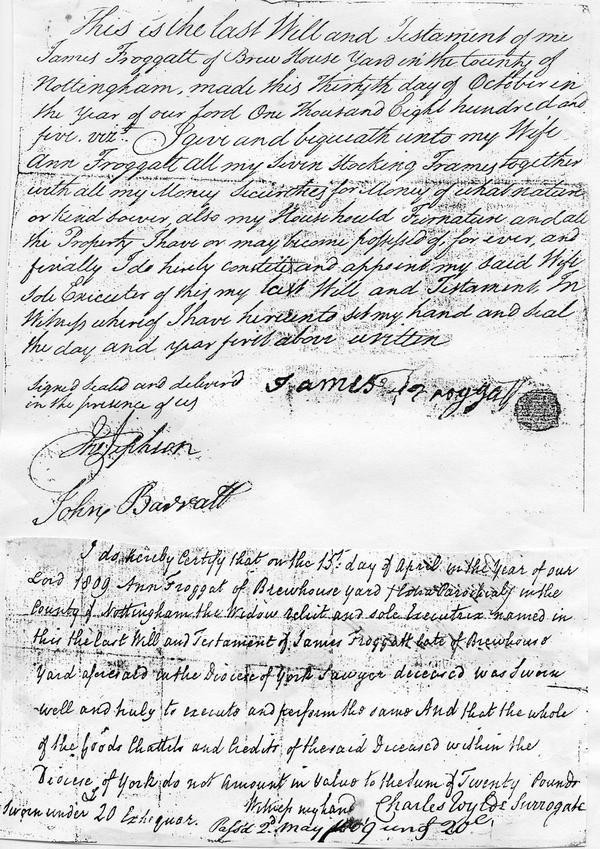
|
" This the last Will and Testament of me
James Froggatt of Brewhouse Yard in the County of
Nottingham, made this thirtyth day of October in
the year of our Lord One Thousand Eight hundred and
five viz. I give and bequeath unto my Wife
Ann Froggatt all my seven stocking frames together
with all my Money Securities for Money of what nature
or kind soever, also my household furnature (sic) and all
the Property I have or may become possessed of, for ever, and
finally I do
hereby constite (?) and appoint my said wife
sole Executor of this my last will and testament, In
witness whereof I have hereunto set my hand and seal
the day and year first above written
Signed sealed and delivered in the presence of us
J Jephson John Barratt James Froggatt
I do hereby certify that on the 15th day of April in the year of our
Lord 1809 Ann Froggat (sic) of Brewhouse Yard extraparochialy (sic) in the
County of Nottingham the widow relict and sole executrix named in
this the last Will and Testament of James Froggatt late of Brewhouse
Yard aforesaid in the Diocese of York Sawyer deceased was sworn
well and truly to execute and perform the same And that the whole
of the goods chattels and credits of the said deceased within the
Diocese of York do not amount in value to the sum of Twenty Pounds.
Witness my hand Charles Joyne Surrogate.
Pass’d 2nd May 1809"
|
The Will was witnessed by John Barratt, James' son-in-law who had married Elizabeth Froggatt in 1803 and who still lived close to Brewhouse Yard.
This Will left all of James' possessions to his second wife Ann (REDGARD) even though James' three offspring Elizabeth, James (II) and Hannah were still alive, and James (II) and family were living with
James and Ann at Brewhouse Yard. The probate for the Will records James as a "sawyer" so he was trading in timber by the time of his death. The seven frames owned by James would have cost him at least £175 new or
about £70 if second hand and would have brought him in about 7-10 shillings per week in rent at the end of the 18th Century. The fate of the seven knitting frames referred to in the
Will is unknown but in 1812, soon after James died in 1808, large scale factory production was beginning to replace home-based framework knitters. I surmise that as the estate was valued at under £20, and
James was a sawyer, then he had already sold the frames. Second-hand frames at this time were worth about £10 each.
A Note About Stocking Frames
The frame work knitters worked at home, having either a frame shop or workshop in the garden or a special room often on the top floor of the house with a special extra wide window to let in the maximum light for the stockinger to work. The yarn was supplied
to the stockinger by the hosier who employed him. A careful check was kept on the amount of yarn used. The amount of yarn supplied and the finished articles would be weighed and any short fall had to be accounted for.
One quarter of an ounce wastage was allowed on every pound of yarn. Stocking frames were expensive. In the years 1780 to 1810 a new frame cost from £25 to £50 depending on its size and quality. A second hand
frame would have cost about £10. Wages during this time were about l5 shillings a week and only a few pence of this could be saved. It was therefore rare for a stockinger to own his own frame. Most frames were
rented from the hosier for between 9d and 2 shillings a week.
By the time of the Restoration in 1660 knitting frames were in Leicester and many other villages. In the next 100 years, using the existing cottage industry set-up, Framework Knitting spread throughout the East Midlands. This period coincided with the
Enclosure of much of the farmland and many people left agriculture to take up framework knitting. By the early 1800's, of the 45,000 Knitting Frames in the country, 90% were in the East Midlands. The making of long hose suited a family unit, the man did the
knitting, the woman did the sewing up and the children wound the hanks of wool onto cones. The Knitting Frame, incorporating a seat and foot pedals, supports the metal knitting machine. A row of fixed hooked needles hold the
knitting, whilst the operator works on the new row. On 19th century machines, five or six rows of knitting with 288 stitches to the row could be achieved in one minute.
By the 19th century, Derbyshire was concentrating on the production of silk garments, Nottinghamshire on cotton, such as Nottingham Lace, and Leicestershire on worsted, woollen garments. As the 19th century progressed trade slumped as fashions
changed, long hose was no longer needed and gentlemen went into trousers, The factory system began to replace the cottage industry and machines were developed to use first steam, then electric power. By 1811, as the
frameknitters of the Midlands were being forced to rent the frames they worked on by the manufactures, only a year later mass production was being introduced by the use of wide knitting frames.
|
The Children of James and Ellen FROGGATT
Elizabeth FROGGATT (1768 - ?)
Elizabeth FROGGATT was born in Duffield, Derbyshire in 1767, the second child of James and Ellen. She was baptised at Duffield St Alkmund in 18 September 1767. Shortly after this the family moved to Wirksworth and Elizabeth was again baptised by the
local minister on 14 September 1768.
Baptism for Elizabeth FROGGATT at Duffield St Alkmund on 18 September 1767. |

Baptism for Elizabeth FROGGATT at Wirksworth on 14 September 1768. |
Before 1794 the family had moved on to Nottingham and settled at Brewhouse Yard. Ellen died there in August 1798. By that date only their oldest daughter Elizabeth was unmarried.
Marriage of Elizabeth FROGGATT to John BARRATT
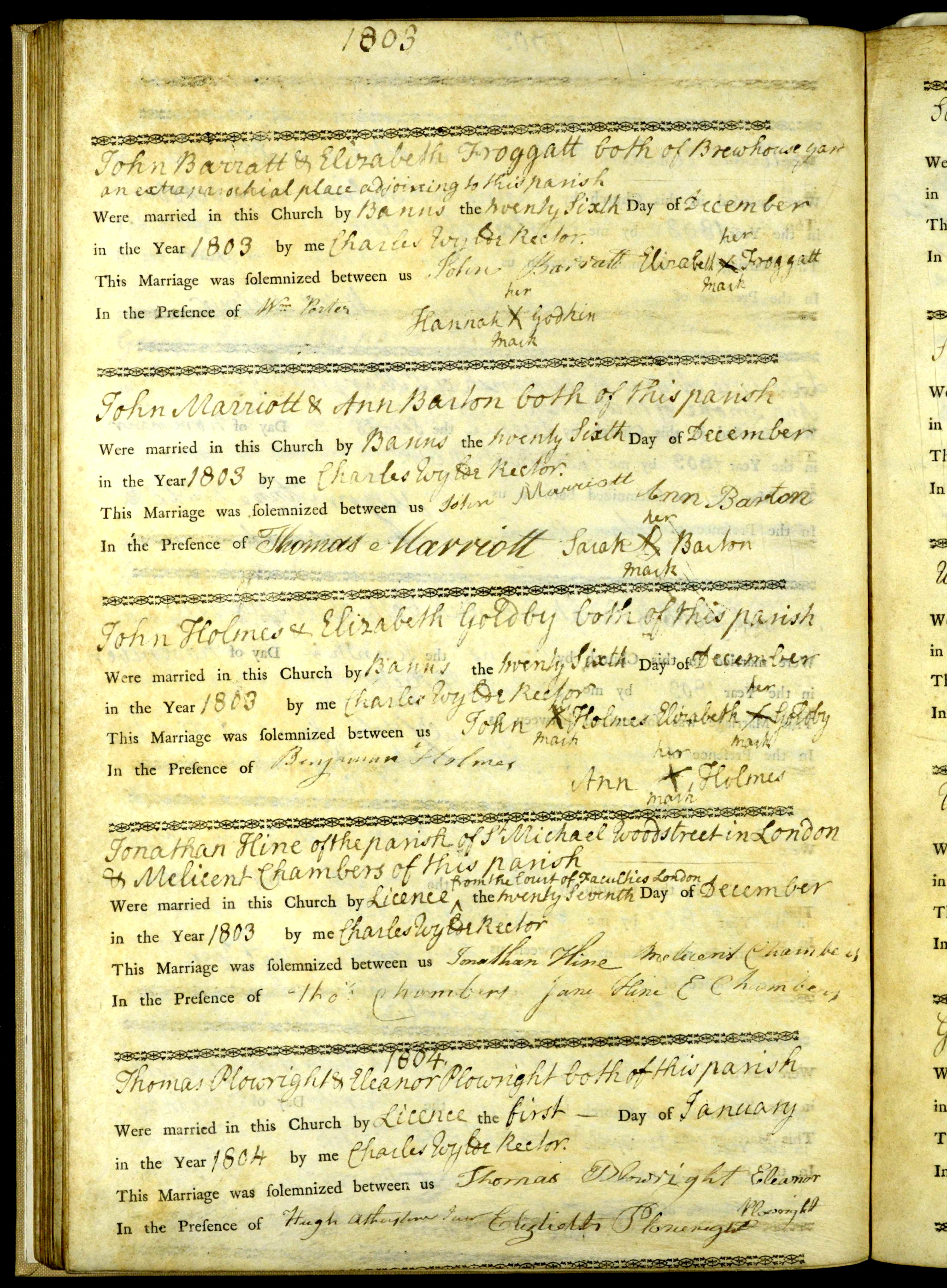
Elizabeth married John BARRATT at Nottingham St Nicholas on 26 December 1803. She was aged 35. One of the witnesses was Hannah Godkin, Elizabeth's younger sister.
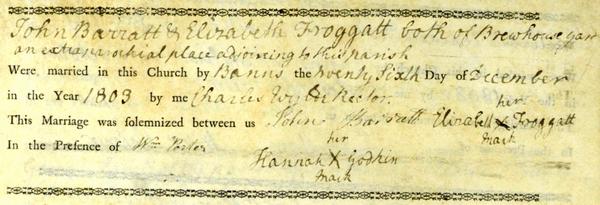
Marriage of Elizabeth FROGGATT to John BARRATT at Nottingham St Nicholas. The witness was Hannah GODKIN, Elizabeth's younger sister.
|
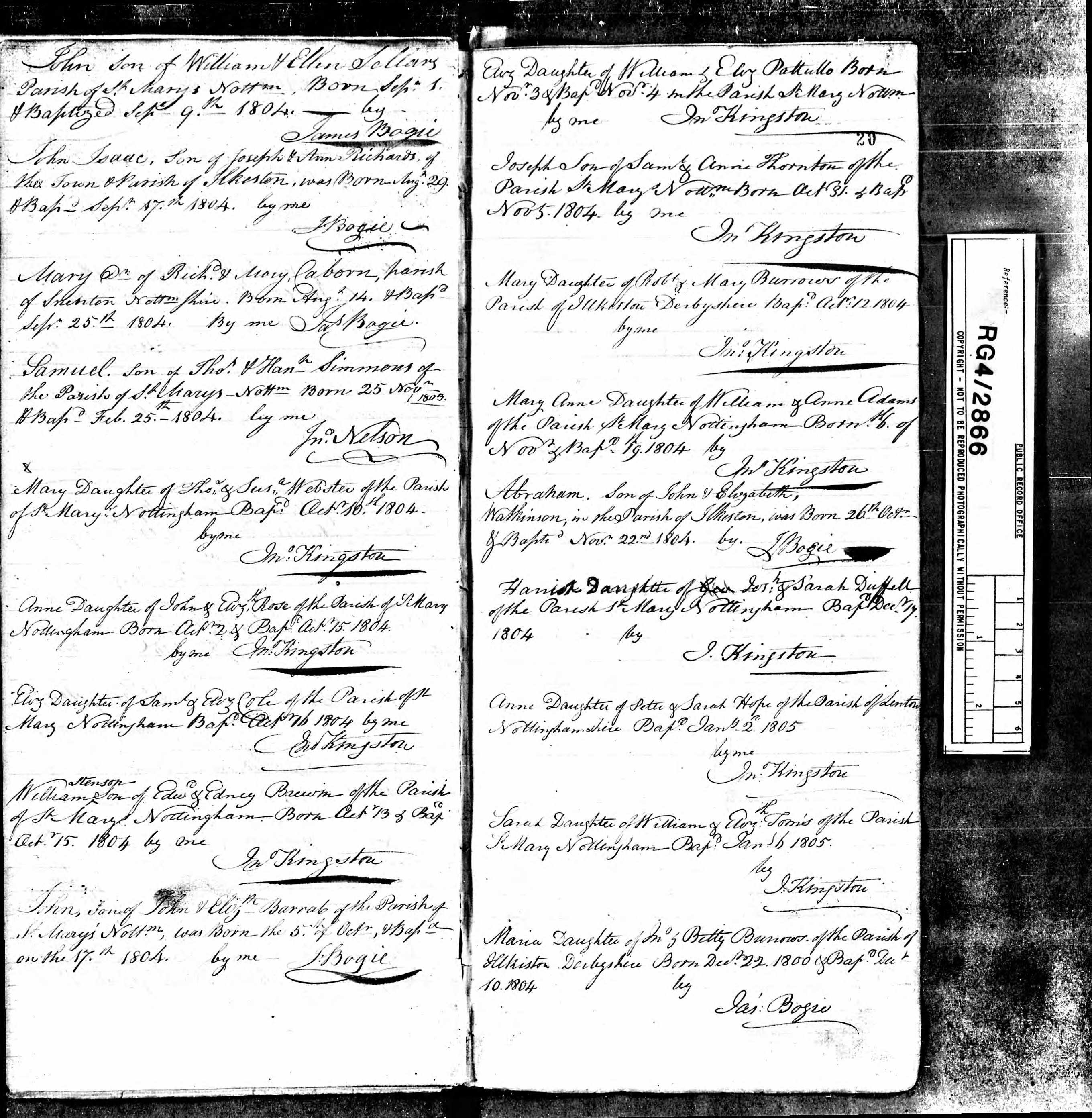
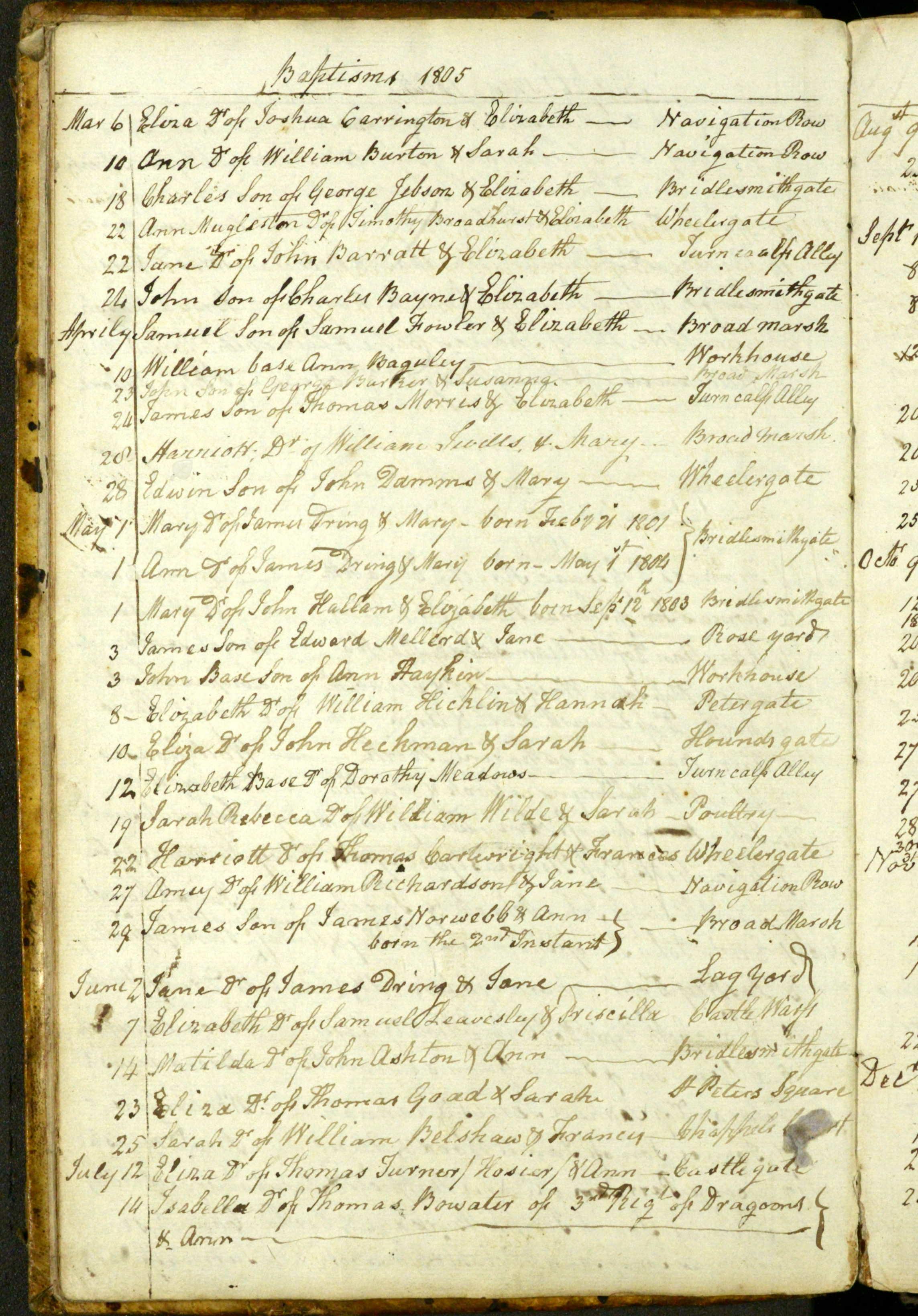
Elizabeth and John appear to have had two children: - John BARRATT born 5 October 1804, baptised at the Wesleyan Chapel, Nottingham on 17 October 1704; and Jane BARRATT baptised at Nottingham St Peter on 22 March 1805. Their address at the time
was "Turn Calf Alley" (now Sussex St alongside the Broadmarsh Bus Station).
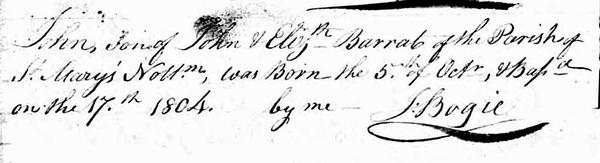
Baptism of John BARRATT at Nottingham Wesleyan Chapel. |

Baptism of Jane BARRATT at Nottingham St Peter. |
After the birth of Jane the family seems to vanish from the records. It appears that Elizabeth and John had died before the 1841 census so it is difficult to determine where they lived.
James FROGGATT (1770-1824)
The story of James Froggatt can be found here.
Hannah FROGGATT (1775 - 1852)
The story of Hannah and her marriage to Samuel GODKIN is here.
THE LAST FROGGATT OF BREWHOUSE YARD
The Froggatt family relationship with Brewhouse Yard came to an end with the death of Joseph Froggatt in 1917. This closed the history on four generations and 17 children who had lived or been born at BHY. Of those 17 children, 9 survived to adulthood
but only 4 were male and who had offspring to continue the Froggatt name. Two of these were the youngest born at BHY (William and Joseph). William’s 2 surviving sons (William and James) emigrated to Australia with only William having children (14 in total)
leaving Joseph’s son Harry Joseph Froggatt as the sole remaining Brewhouse Yard descendent bearing the FROGGATT name in England. And Harry died in 1956 without male heirs.
William (1869-1947) had 14 children in Australia and New Zealand but only 5 were sons who reached adulthood. The oldest, Frank, was adopted early in his life and become known as Frank HUME. The other 4 having 7 sons between them.
Back to top of page
Back to Froggatt Family History
Last updated: 9 October 2023
|